
PVT for Home Owners:
Clever Alternative to Air and Geothermal Heating.
Heat and Power from One Module. Quick, Affordable, Higly Efficient, and Without the Need of Planning Permission.
The Heat Source for Heat Pumps. No Outdoor Unit.
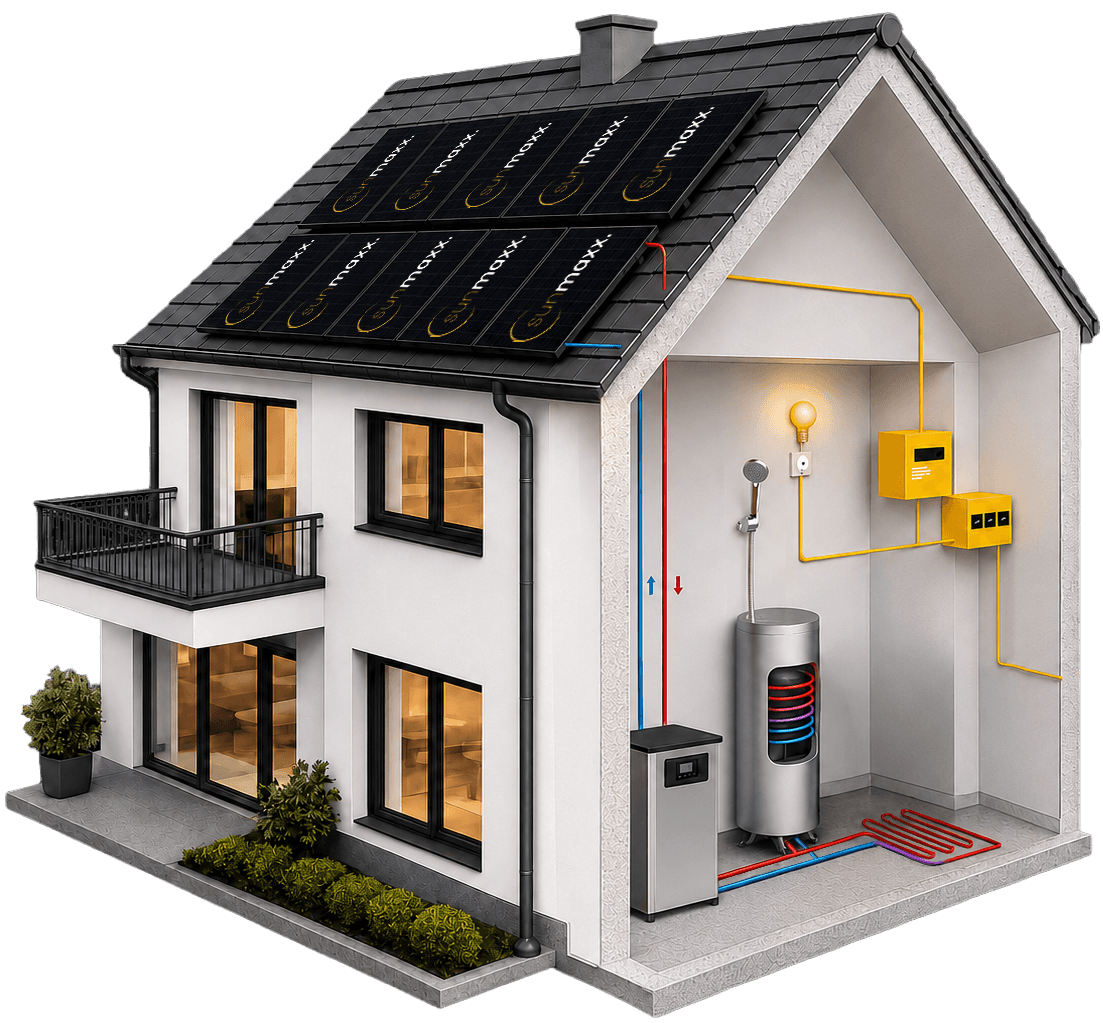
Image partly created with AI
Renewable Heating.
While Generating
Your Own Electricity.
- No bulky outdoor unit.
- No noise emissions.
- No unhappy neighbours.
Become self-sufficient now:
- Solar power and simultaneous heat generation
- Long-term predictable and low energy expenses
- One of the most efficient heating systems available
- With optional cooling function
- Eligible for a grant of up to 80%
Why PVT Is a Good Choice for Your Home
PVT combines power generation with the comfort of a geothermal heat source. Without the need for drilling or excavation. Research institutes such as Fraunhofer ISE recognise PVT as a worthwile alternative when boreholes are technically impractical or financially unfeasible. By using the roof as the heat source, PVT preserves the appearance of your home and property while reducing planning complexity and installation effort.
-
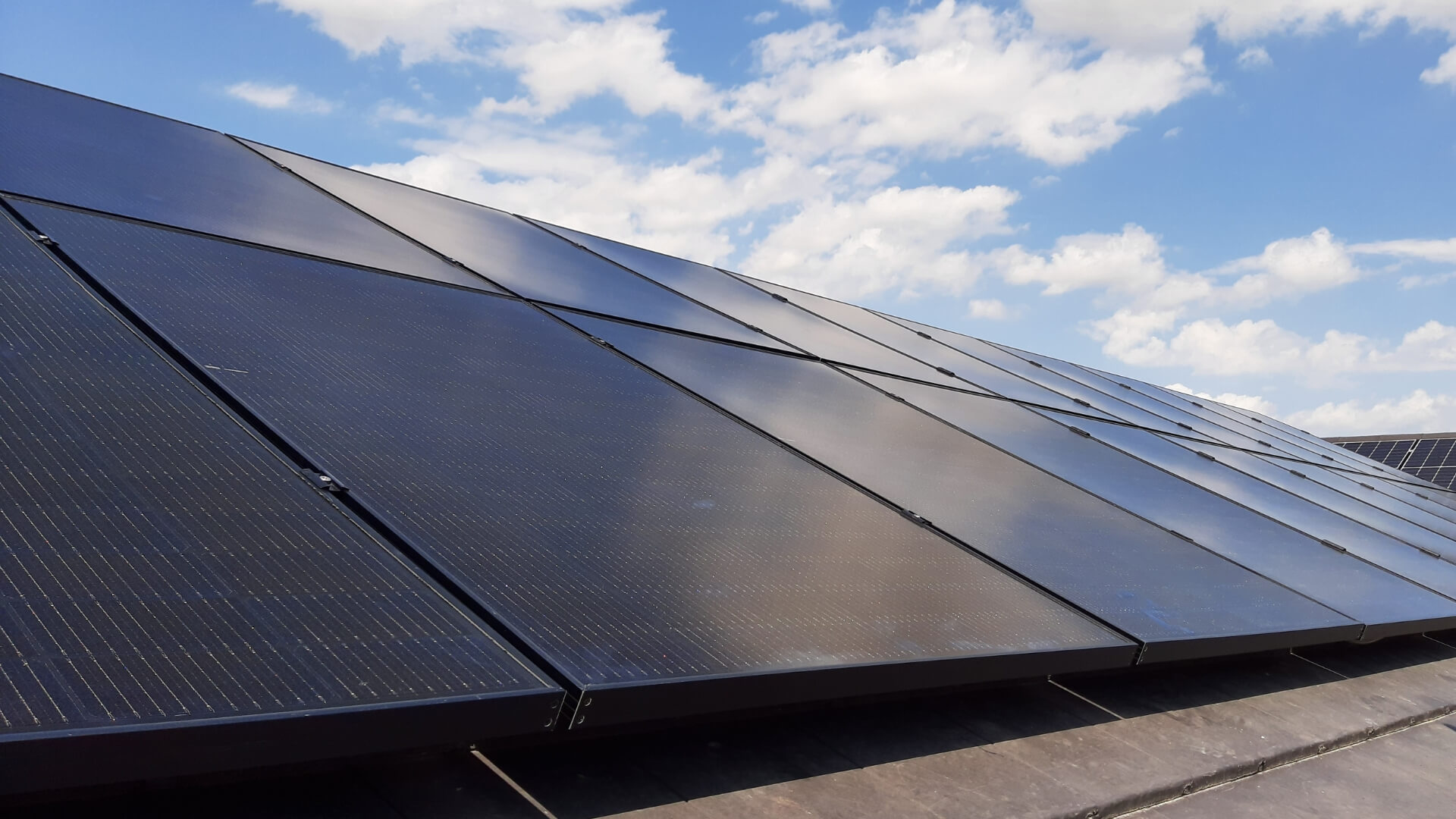
Front side of the module: Clean electricity for the heat pump, household, EV charging, and solar thermal energy
-
Rear side of the module: Ambient thermal energy and heat extracted from the PV side
-
100% silent, frost- and heat-resistant transport of thermal energy from roof to heat pump
Making the Switch – But in the Right Way.
By Getting the Best of Both PV and Solar Thermal Energy.
Rising oil and gas costs make choosing a heat pump a no-brainer. PVT addresses precisely the areas where conventional solutions fall short: aesthetic appeal, silent operation, ease of obtaining planning permission, no regulatory hurdles, short lead times and rapid implementation.
The Intelligent Way to
Tap Into a Heat Source.
- PVT unlocks a new heat source for brine-to-water heat pumps, commonly known as ground-source heat pumps. The key difference is that the heat source is not located in the ground, but on the roof.
- Together, PVT modules and brine-to-water heat pump form a complete heating system for virtually any type of building.
- Thermal storage can be integrated where required, but in many applications it remains optional.
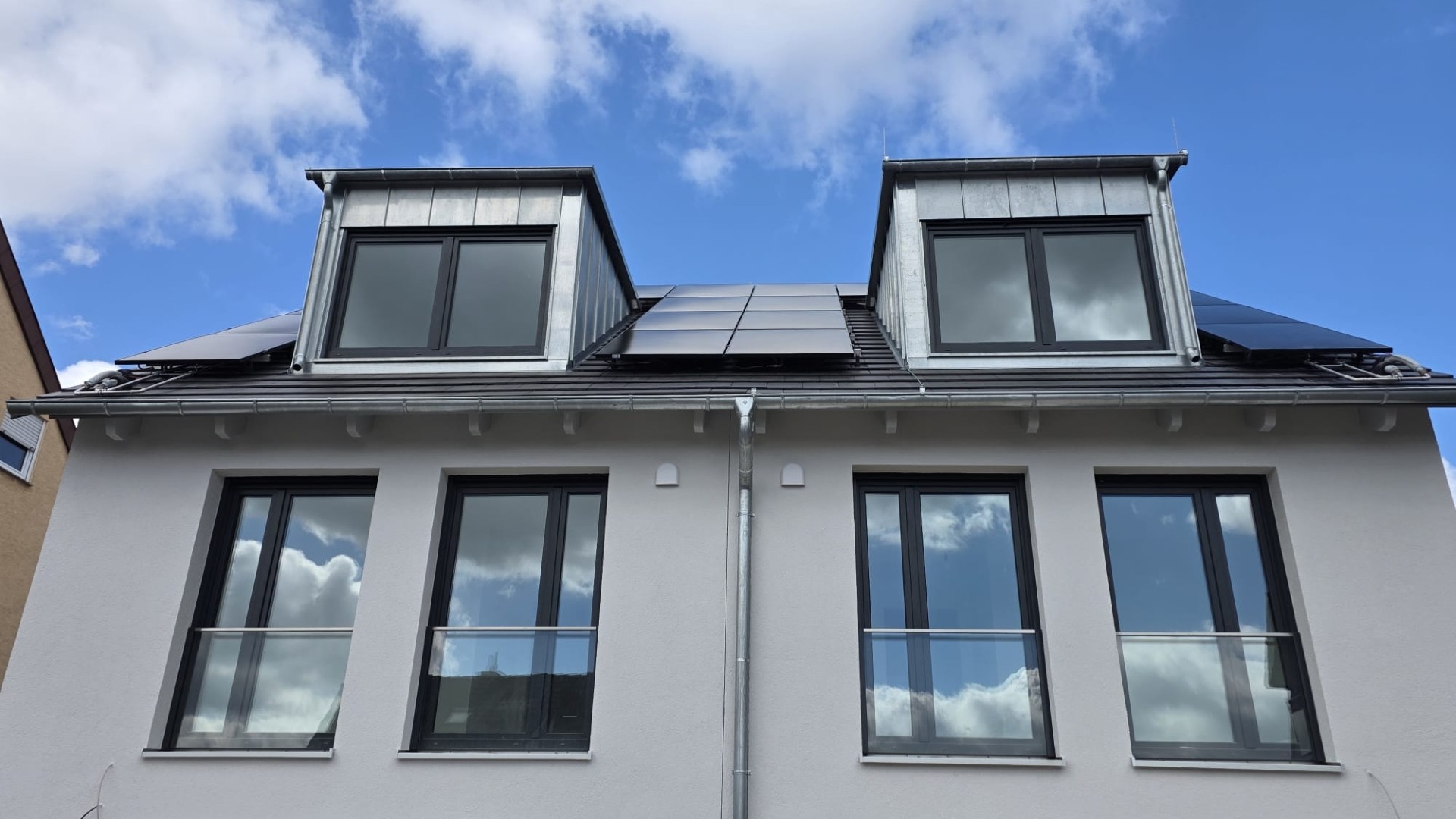
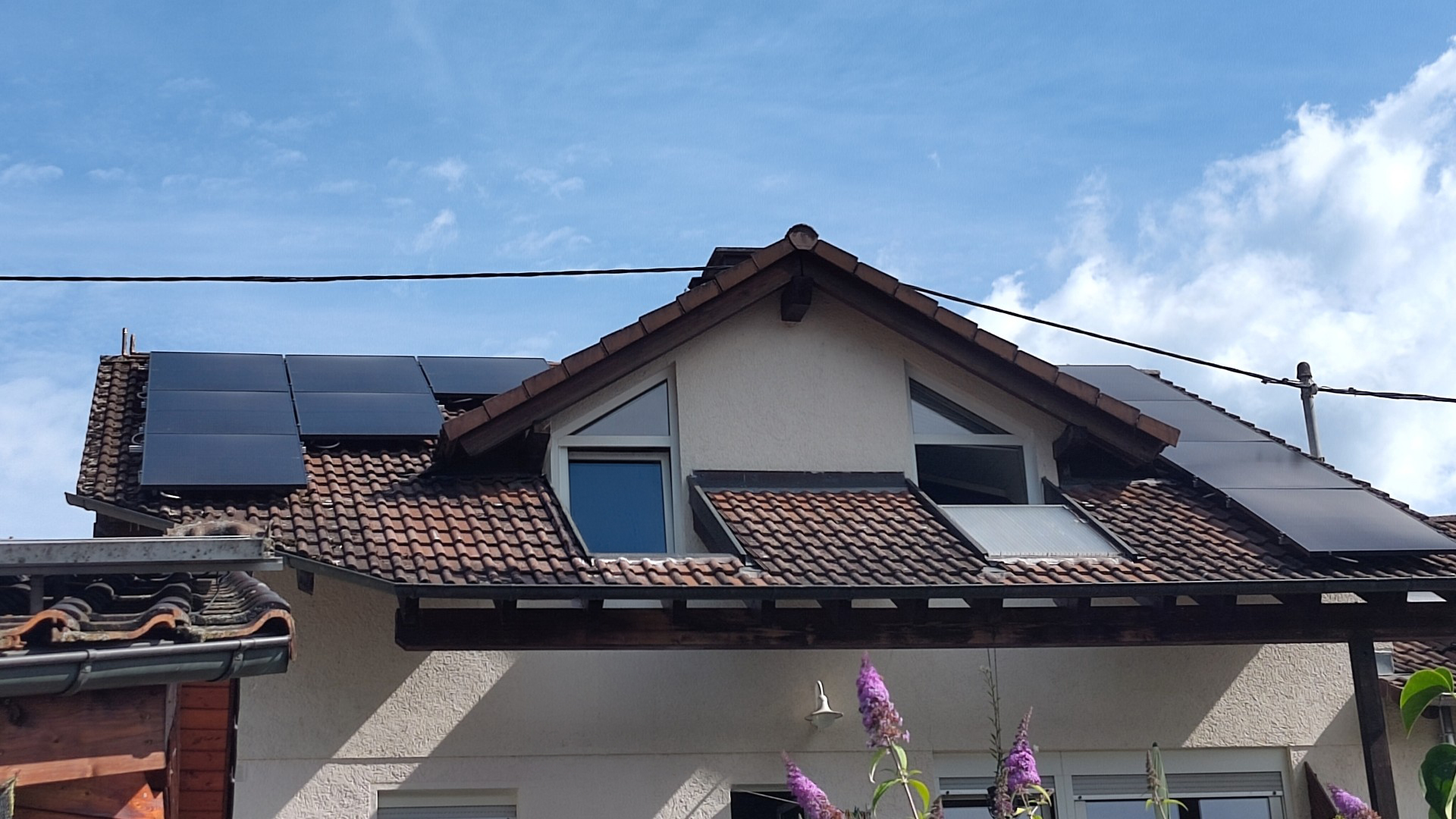
Pros of Using PVT as Heat Source
- Heat supply via solar radiation & ambient air on the PV side and ambient air only via heat exchanger on the backside.
- Space-saving and completely silent operation – no outdoor unit.
- Significantly more efficient than air-to-water systems.
- Makes roof areas three times more productive.
- Snow melting possible.
- Also suitable for cooling of the building.
Designed for straightforward permitting: No noise-related restrictions, no limitations in water protection zones, and no lengthy approval procedures or waiting times.
Good to know: Comparing the module costs of PVT and conventional PV alone does not provide a meaningful basis for evaluation. PVT is primarily a heat source technology, supplying renewable thermal energy to a building's heating system. The electricity generated is an additional benefit. By combining heat supply and power generation in a single module, PVT reduces system components, resulting in lower complexity and reduced maintenance requirements.
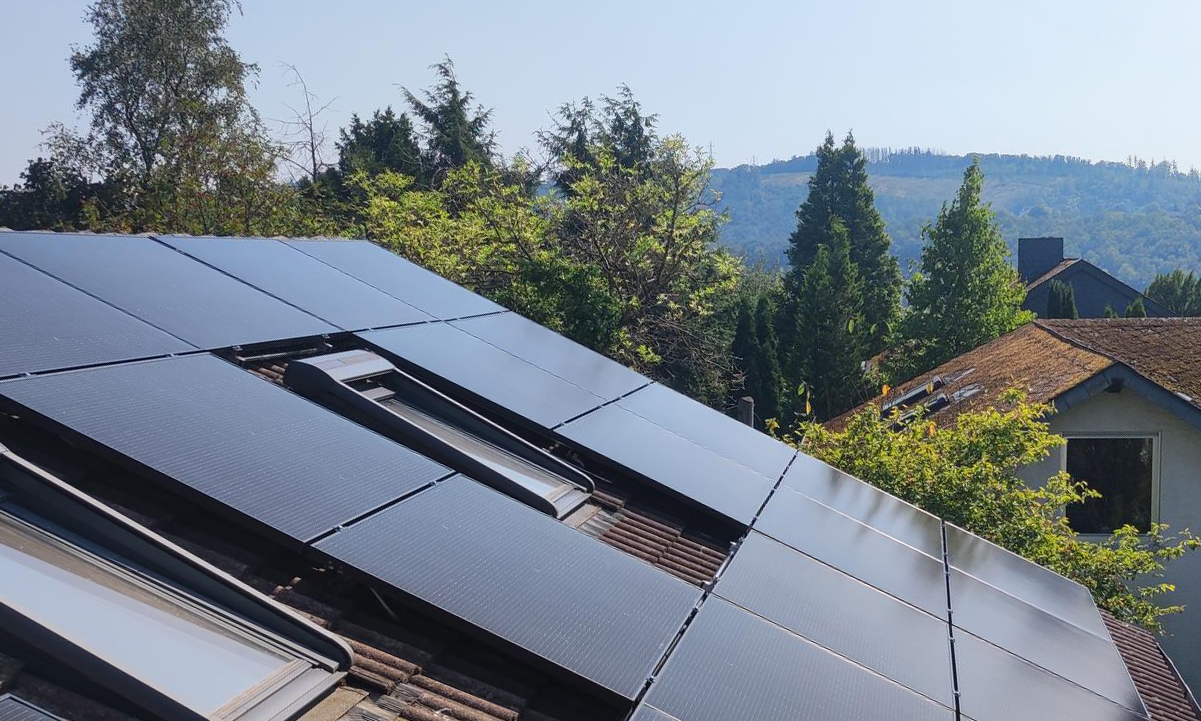
For New and Existing Buildings.
- Fully compatible with wall-mounted radiators. Underfloor heating not necessary.
- Suitable for virtually any PV-ready roof.
- Can be installed on flat and pitched roofs with indications from 0° to 90°, as well as on façades and free field.
- Suitable for installation on north-facing roofs as well.
- No additional outdoor insulation required.
Your PVT Project with Sunmaxx – Step by Step
Sunmaxx is exclusively a manufacturer of PVT modules and does not install complete systems. However, we work closely with an extensive network of certified installation partners across Germany, Austria, Liechtenstein, and Switzerland. We also have installation partners in a growing number of international markets and are happy to connect you on request.
1. Your Enquiry to Sunmaxx
You submit your enquiry via our online form or contact one of our installation partners directly.
2. Schedule Consultation
One of our installation partners will contact you to arrange an on-site consultation at your premises.
3. Consultation & Quotation
Our installation partner assesses your building and heating requirements and prepares an offer tailored to your wishes.
4. Installation & Activation
Our installation partner implements the system and carries out its commissioning. They remain your contact for maintenance and repair.
All consulting, system design, installation, and commissioning services are provided by our trusted partner network, ensuring professional support throughout every stage of your project.
Long-term Value Retention, Greater Energy Independence, and Financial Security.
Modernizing your building now means benefitting from lower energy costs for decades to come. PVT-based heating systems are designed for straightforward permitting and provide a high degree of independence from external energy suppliers. No need for expensive oil, gas, or district heating, and no reliance on biomass fuels. A highly efficient solution with a reduced number of system components, minimizing maintenance requirements and absolutely future-proof.
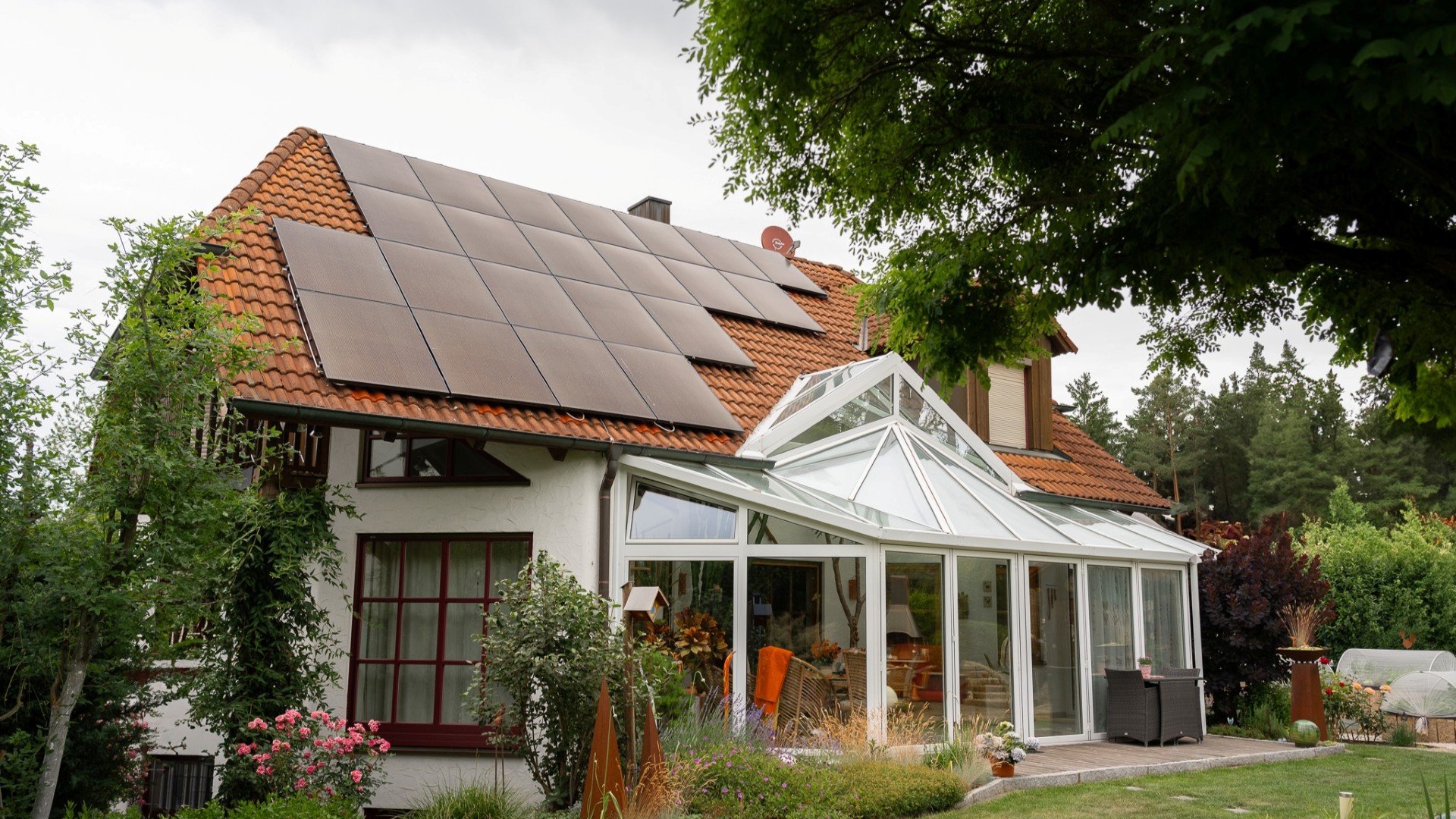
© FOMO Videography
A renewable heating system based on Sunmaxx PVT modules and a brine-to-water heat pump delivers consistently low and predictable energy costs in the short and long term, as ambient air and solar radiation are the most cost-effective sources of energy available. At the same time, the system operates with outstanding efficiency, uses state-of-the-art technology, and enhances the value of your property.
Is PVT the Right Option for My House?
A modern, largely self-sufficient heating system is not only a worthwhile investment for new builds. The combination of on-site electricity and heat generation from your own roof also delivers significant benefits when retrofitting existing buildings or energetically refurbish older homes. Whether your property is suitable for a PVT system depends on factors such as:
- New build or existing property? In new-build projects, you can integrate a PVT system into your heating concept right from the start, achieving the highest levels of energy efficiency. For existing buildings, PVT is often the ideal solution when an outdoor heat pump unit is not desired or when geothermal energy is not feasible due to space or budget constraints. With PVT, your property remains exactly as it is, without excavation or major groundworks.
- The flow temperature rule and heat emitters: If your heating system operates with a flow temperature between 30 and 40°C, PVT is an ideal heat source. Conventional radiators can often be improved after hydraulic balancing. They have typical flow temperatures of 40 to 45°C and sometimes even > 50°C and are also fully compatible with our PVT heating technology.
- Insulation and renovation standard: A full passive house refurbishment is not required. A PVT system can already be operated economically in homes with a solid insulation standard, such as double-glazed windows and insulated upper-floor ceilings.
- Available roof area: For a typical single-family home, 20 - 30 m² (215 - 323 sq ft) of roof area is often sufficient to cover the building's heating demand with PVT. Since the same collector area generates both electricity and heat, PVT enables exceptionally high levels of energy self-sufficiency.
- Roof orientation and layout: Because PVT modules also harvest thermal energy from the ambient air, their orientation is much more flexible than that of conventional photovoltaic modules. Even north-facing roofs can be equipped with PVT. For maximum overall energy yield, a combination of PVT on the north-facing roof and conventional PV on the south-facing roof can be an excellent solution.
- Protection against rising energy prices: With PVT, you generate a large share of the energy you need yourself. Your roof becomes your own power plant, significantly reducing your dependence on external energy suppliers while enabling you to generate electricity and heat—and even cool your building—at the lowest possible operating costs.
- An investment in the value of your property: Upgrading your home to a highly energy self-sufficient building with a strong energy performance certificate not only demonstrates environmental leadership but also increases your property's long-term value. It is an investment that benefits both your home and your future.
- A unique funding opportunity: In Germany, the state-owned KfW currently subsidizes up to 80% of eligible costs for switching to climate-friendly heating systems. This makes the transition to a heat pump particularly attractive. In addition, PVT modules—like conventional PV systems—benefit from a 0% VAT rate, further reducing the overall investment cost.
Comparing Heat Sources: PVT vs. Geothermal Energy vs. Air-to-water Heat Pumps
| Technology | PVT | Geothermal | Air-to-water Heat Pump |
|---|---|---|---|
| Number of components | ✔2 | ✔2 | ✔2 |
| Permit required? | ✔no | ✔yes | ⚠depending on local regulations |
| Outdoor unit required? | ✔no | ✔no | ✖yes |
| Noiseless operation? | ✔yes | ✔yes | ✖no |
| Required space | ✔none: roof installation | ⚠in the underground, earthworks necessary | ✖installation space and distances to be kept |
| Energy supply | ✔heat and power | ⚠heat only | ⚠heat only |
| Typical SPF | ✔4.5 - 6 or higher | ✔4.5 - 6 or higher | ✖< 3.5 |
| Cooling possible? | ✔yes | ✔yes | ✔yes |
| Investment costs | ⚠medium | ✖high | ⚠medium |
| Funding eligibility | ✔yes + VAT-exempt | ⚠yes | ⚠yes |
Does PVT Also Work in Winter or At Night?
Yes, PVT also works in winter and after the sun has set. The heat exchanger on the rear side of each module harvests thermal energy not only from solar radiatiation but also from the ambient air surrounding the PVT module, providing a continuous heat source for the heat pump. In other words, Sunmaxx modules deliver reliable heat all year round – even at double-digit sub-zero temperatures and throughout the night – without requiring the heat pump's electric backup heater to be activated.
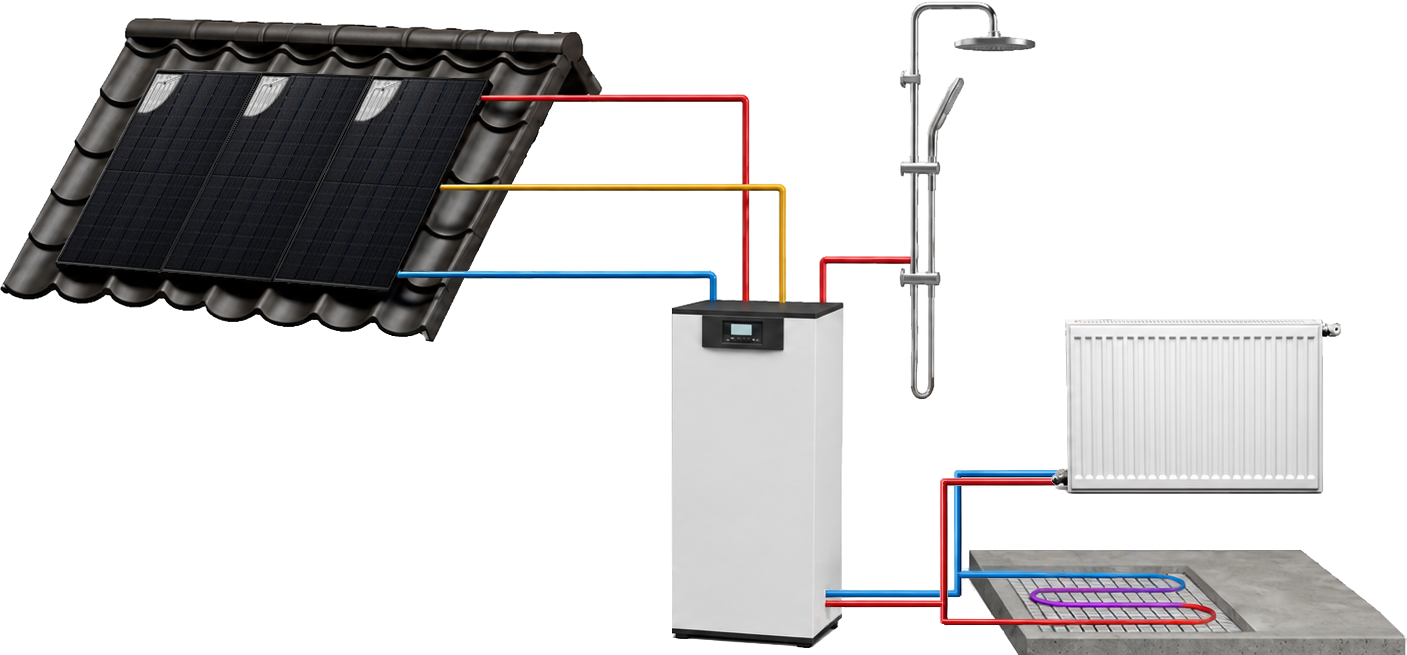
Image partly created with AI
A heating system doesn’t prove its worth during the milder months, but rather when it’s needed most. The past winter of 2025/26 was a tough one. PVT heating systems using Sunmaxx modules as the sole heat source performed impressively across the board, delivering excellent annual performance factors of 4.5 and even higher. You can find out more about such monovalent or mono-energetic systems in our field data report.
Snow Melting Possible – Key Advantage Compared to Common PV
PVT maximizes the electrical yield on your roof. Firstly, the integrated heat exchanger dissipates excess heat during summer, cooling the PV cells and improving their electrical efficiency. Secondly, the same principle can be used in winter to melt snow off the module surface by reversing the heat pump's circuit for a short time. This requires little electricity, and thanks to the thermal inertia of the heating system, indoor temperatures remain virtually unchanged.
This video is played via the platform YouTube. By clicking play, you agree that data may be processed by YouTube as a third-party provider. Sunmaxx has no influence over this data processing.
How PVT Is Brought Into Your Home
- Buiding and roof assessment: Every project begins with a site assessment. Our installation partner evaluates your property's structural and thermal characteristics to establish the best foundation for system design.
- Heat load calculation and system design: Our partner calculates your building's individual heating demand (heat load) and sizes the heat pump. This determines the required number of PVT modules.
- Tailored proposal and government funding: You receive a customised proposal tailored to your project and including available government funding programmes.
- Installation of PVT modules and heat pump: Our installation partner installs the PVT modules, completes the hydraulic and electrical system integration, and connects the system to the heat pump.
- Commissioning of the heating system: Once all components have been professionally installed and commissioned, your new heating system is ready for operation.
- Ongoing Support and Maintenance: If desired, our partner continues to support you after installation with maintenance, system monitoring, and ongoing service.
From then on, you can enjoy the benefits of a highly efficient and reliable renewable heating system – greater energy independence, predictable long-term energy costs, and the confidence that your investment is built to perform for decades to come.
Sunmaxx PVT in Different Private Applications
Actions speak louder than words, and customer success stories are more convincing than any marketing promise. That's why, together with Felix Goldbach from Money for Future and our installation partner Kütro, we visited a homeowner who renovated his property in 2024 and chose PVT as the sole heat source for his heating system. Watch the interview and discover his first-hand experience here.
This video is played via the platform YouTube. By clicking play, you agree that data may be processed by YouTube as a third-party provider. Sunmaxx has no influence over this data processing.
Further Private and Residential References
From Oil Heating to 100% Renewable Heat and Power
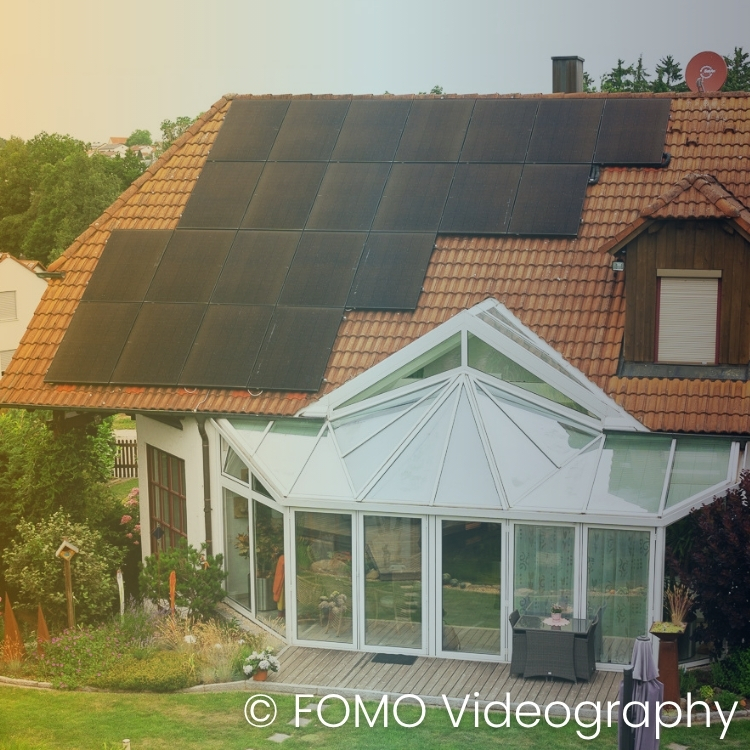
After more than 20 years of service, the existing oil-fired heating system needed to be replaced. The result: an integrated system with PVT as sole heat source, combined with an optional thermal storage. In addition to providing renewable heat and electricity for the building, the system is also used to heat a pond, demonstrating the versatility of PVT technology.
Project Saver: 75% Less
Geothermal Space Required
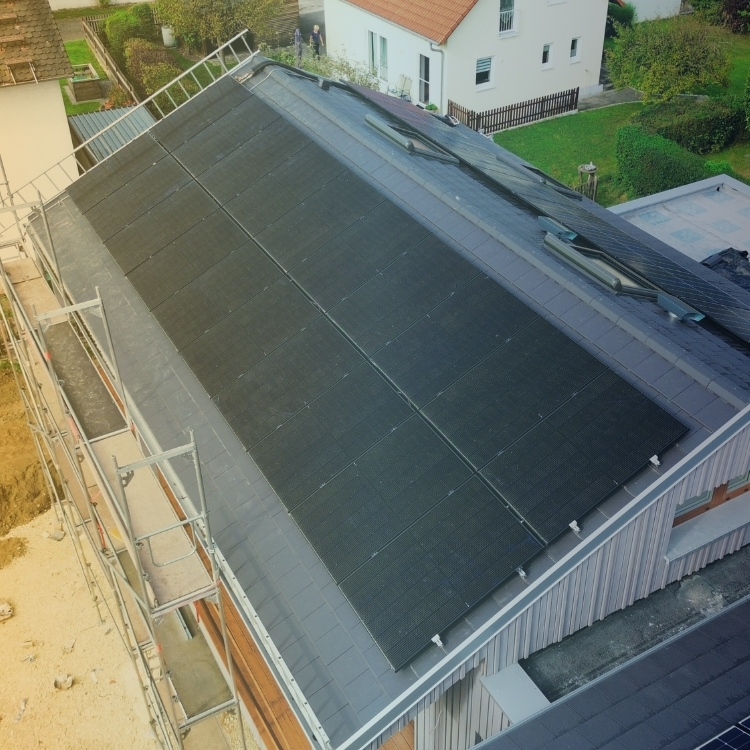
An efficient ground-source heating system was desired, but borehole drilling was not feasible and the available land was insufficient for conventional ground collectors. This was when PVT stepped in and provided the required energy. By using the roof as the primary renewable heat source, the geothermal area could significantly be reduced.
Payback Champion: Energy Retrofit of a Historic Villa
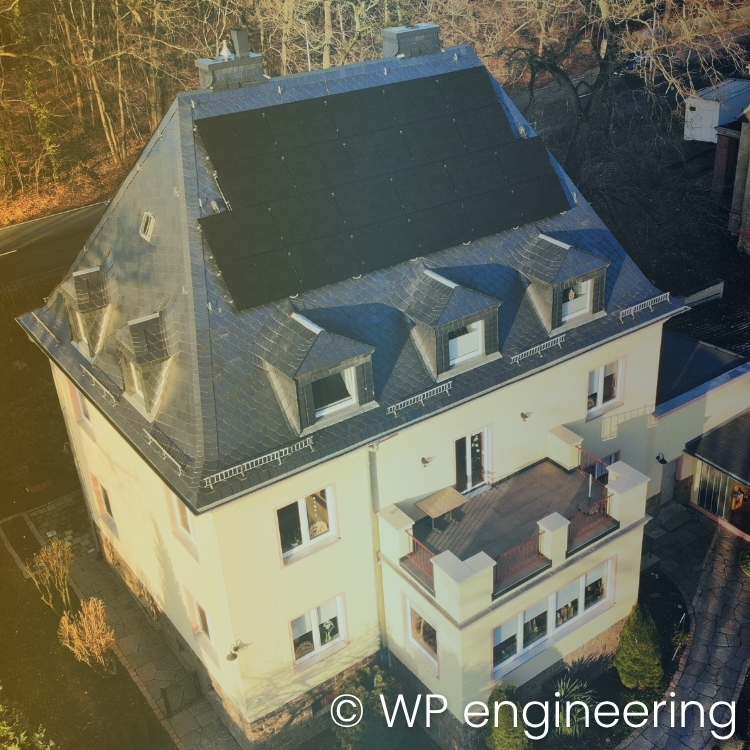
Historic preservation prohibited any alterations to the building's façade, while rapidly rising energy costs made the existing heating system increasingly uneconomical. By combining PVT modules, a brine-to-water heat pump, ground collectors, thermal energy storage, and advanced heat source management, annual energy costs were reduced by almost 82%.
Even More Advantages of PVT to Learn About
-
More electricity through cooling of the module: Conventional PV modules get extremely hot during summer, reducing their electrical output. The integrated rear-side heat exchanger extracts excess heat from the solar cells and uses it as a renewable heat source for the ground source heat pump. The result: up to 10% higher annual electricity yield compared to standard PV modules.
- Thermal gain both from solar radiation and ambient air: The rear side of the PVT modules extracts thermal energy both from the PV cells and from the surrounding air and transfers it to the heat pump. In this context, heat is a relative term – even at –10°C, the ambient air still contains usable thermal energy that can serve as a heat source for a brine-to-water heat pump.
- Maximum roof space efficiency: Where two separate systems were once needed – photovoltaics for electricity and solar thermal collectors for heating support – a single PVT module now delivers both. This saves roof space, reduces installation time and maintenance requirements, and creates a cleaner, more attractive appearance.
- Proven frost resistance: Extensive winter testing during the 2025/26 heating season confirmed that Sunmaxx PVT systems continue to operate reliably even under extreme winter conditions and are capable of fully supplying a building's heating demand.
- Higher source temperatures than air-source heat pumps: Whenever the sun is shining, PVT delivers significantly higher source temperatures than a conventional air-source heat pump. Solar irradiance warms the heat transfer fluid inside the module to 10–15 K above the ambient air temperature, and under favourable conditions even more. This reduces compressor workload, improves the heat pump's efficiency, and lowers overall energy consumption.
-
Silent, Space-saving and vandalism-proof: Once installed on the roof, the system saves valuable outdoor space while providing effective protection against vandalism. With no fans required, it operates completely silently.
-
No costly or time-consuming permitting procedures: PVT is one of the most permit-friendly renewable heat sources available. No drilling permits, geotechnical surveys or groundwater discharge approvals are required, and there are no noise emission restrictions to be kept in mind since the system operates 100% silently. All system components are discreetly installed on the roof and in the utility room or basement.
-
Future-proof for new builds and retrofit projects
The system is highly scalable and can be integrated into existing buildings with ease, often without the need for additional insulation or replacement of existing radiators. It is equally well suited to new construction and renovation projects.
How Much Does a PVT Heating System Cost
– Is It Economically Viable for Me?
A new heating system is an investment in your property for the next two decades and beyond. With PVT, you get a fully integrated energy system in which every component is perfectly matched. Thanks to available government incentives and the dual energy yield of PVT, generating both electricity and heat from a single module, a PVT-based heating system typically offers a significantly shorter payback period than comparable solutions. The overall costs consist of:
- PVT area (total number of modules)
- Components (mounting system, pipework, inverter)
- Brine-to-water heat pump
- Professional installation and commissioning
- If required: Removal of the existing heating
- Optional: Thermal storage / heat source management
Compatible with Your Preferred Brine-to-water Heat Pump Model and Manufacturer
Sunmaxx does not require you to use a specific heat pump model or brand. This gives you the freedom to choose the manufacturer that best suits your preferences and project requirements. Many of our installation partners already work with established heat pump brands and include proven models as part of their standard portfolio. This flexibility allows the heating system to be tailored to your building while making the most of your installer's expertise.
Trusted Heat Pump Brands Used in Sunmaxx PVT Installations
alpha innotec · Bosch/Buderus · Dimplex · Ecoforest · Heidinger · iDM · M-TEC · NIBE · NOVELAN · OCHSNER · ratiotherm · STIEBEL ELTRON · tecalor · Vaillant · Viessmann · WATERKOTTE
Highest Standards in Product Quality, Performance, and Service
Trust is important, proven quality is even better. Our PVT modules and manufacturing processes meet the highest quality standards for solar thermal technologies, giving you complete confidence in your investment. Every system is engineered to deliver reliable performance, long-term durability, and maximum operational safety.
Solar Keymark Certified
Europe's leading quality certification for solar thermal products, confirming compliance with the highest recognised performance and quality standards.
Awarded with
Honoured with the German Sustainability Award 2025 in recognition of the company's pioneering contribution to the energy transition.
Certified According to
Highest production standards: Sunmaxx manufactures its products in accordance with the ISO 9001 quality management standard, with certification audited by TÜV SÜD.
Ready to Make Your Home Quiet, Efficient, and Largely Energy Independent?
Let our network of certified installation partners assess how your roof can be transformed into a highly efficient source of renewable heat and electricity. Submit your enquiry today or get in touch directly with one of our installation partners to start planning your PVT heating system.
Frequently Asked Questions About Sunmaxx
Snow has little impact on heat generation. Even when the front surface of the modules is covered with snow, PVT systems continue to provide sufficient thermal energy for heating by extracting ambient heat through the rear side of the modules. Thanks to the thermal circuit and the module's closed-back design, ice formation is minimised and snow typically melts more quickly than on conventional PV modules. If rapid restoration of electricity generation is required, the heat pump can temporarily reverse the heating circuit and gently warm the PVT modules. Raising the module temperature to just 5–6°C is usually enough to clear snow and ice from the surface, allowing electricity generation to resume. Because underfloor heating systems have a high thermal inertia, this brief reversal of the heating circuit is generally unnoticeable to occupants while requiring only a minimal amount of energy.
No, that will not happen. PVT systems use a glycol-based heat transfer fluid that is designed to withstand both freezing and high temperatures. It remains liquid even in severe sub-zero conditions and stays thermally stable at elevated temperatures, eliminating the risk of freezing, excessive pressure build-up, or fluid degradation. This is a key advantage over conventional solar thermal systems, which can be more susceptible to overheating and stagnation under extreme operating conditions.
Yes, every PVT system is individually designed to provide sufficient thermal energy for reliable heating operation, even during the night and under the most demanding outdoor conditions. This ensures that the heat pump always has an adequate renewable heat source available, especially throughout the heating season.
No – in fact, quite the opposite is the case. Because a PVT system operates without mechanical outdoor components such as fans, there are no external moving parts that are subject to wear. This contributes to high reliability and low maintenance requirements. The closed hydraulic circuit uses a glycol-based heat transfer fluid that is specifically designed for this application and, when properly installed and operated, poses no environmental risk. Routine maintenance is generally limited to the standard annual inspection of the heat pump. During this service visit, the PVT system can also undergo a visual inspection and, if required, a pressure check to ensure continued reliable operation.
Yes. Expanding the system at a later stage is straightforward. On the electrical side, a PVT system works just like a conventional photovoltaic installation and can be retrofitted with a battery storage system, an EV charger, or both at any time. Also, you are not tied to a specific manufacturer, giving you the flexibility to choose the products that best suit your requirements.
Explore the Topic in Even More Depth
What exactly sets PVT modules apart from conventional PV? Why does PVT outperform almost any solar thermal system? And what makes Sunmaxx different from other PVT manufacturers? Our expert FAQs provide in-depth answers to various of technical questions, with new content constantly being added.
The Path to Your New PVT Heating System
Installation Partners at Your Service
At Sunmaxx, you gain more than access to the world's leading PVT technology: You benefit from a network of proven PVT experts. Our qualified HVAC and plumbing as well as specialist solar installers have been trained in Sunmaxx' technology and have demonstrated experience in the planning and installation of PVT.
Your Trusted Installer Can Do PVT, too.
Installing a PVT system is straightforward. After completing a one-day training, any qualified heating contractor or solar installer can install and integrate a Sunmaxx PVT system. We offer trainings approx. once a month, registration is quick and easy via clicking TRAININGS, EVENTS in the main menu on our website.
Subsidies: Up to 80% in Grants Available Plus VAT Exemption
The transition to climate-friendly heating systems is currently supported by some of the most attractive government funding available. In Germany, homeowners renovating existing buildings may be eligible for substantial grants through the KfW funding programme, including:
-
- Base grant for replacing a fossil fuel heating system
- Climate Speed Bonus for an early switch to renewable heating
- Income-based bonus for households of up to 40%
- Additional VAT exemption for the entire PVT system including all components such as modules, mounting structure, piping and hydraulic components, inverter, and more, just like common PV
Shortened Payback Period of PVT Systems
PVT helps your new heating system pay for itself more quickly by combining outstanding energy efficiency with an integrated system design. The result is lower operating costs, higher energy yields, and a faster return on investment.
- Highly efficient system design: The combination of PVT modules and a brine-to-water heat pump provides stable source temperatures throughout the year, enabling consistently high operating efficiency. Seasonal performance factors (SPF) of 4.5 and above can be achieved under suitable conditions.
- Lower electricity consumption than comparable systems: Unlike conventional heat pump systems, a brine-to-water heat pump supplied by PVT benefits from two renewable heat sources: solar irradiance and ambient air. This results in higher source temperatures which reduces compressor workload, lowering electricity consumption while improving overall system efficiency.
- Simultaneous heat and electricity generation from the same roof area: PVT modules generate both thermal energy and electricity in a single system, eliminating the need for separate roof-mounted technologies and reducing planning complexity. Because excess heat is continuously removed from the photovoltaic cells, they can deliver up to 10% higher annual electricity yields than conventional PV modules. This further increases the building's energy self-sufficiency.
- Fewer system components and suppliers: By combining multiple functions within a single technology, PVT reduces the number of system components, interfaces, and suppliers involved. This simplifies project planning, lowers installation complexity, and can reduce both investment and long-term maintenance costs.
Why We Don't Communicate Fixed Prices
Every home is unique and comes with its own specific requirements. With so many variables, quoting a fixed price upfront would be highly misleading. That is why every proposal is preceded by a detailed site assessment and a comprehensive consultation to ensure the system is tailored precisely to the property's requirements. The final system cost depends on the following factors:
- Location of the building
- Year of construction
- Your annual heating demand
- Construction, condition, and insulation standard
- Type and efficiency of your existing heat distribution system (e.g. underfloor heating or radiators)
- The available roof area, its orientation, and pitch
- Any roof obstructions or other design-related constraints
- The existing hydraulic infrastructure and whether it can be integrated into the new system
- Whether you require a thermal storage solution
- Whether the system should also provide building cooling, energy and heat source management
- Any other project-specific technical requirements
Get Your Individual PVT Offer Now
OR