
PVT for Planners and Architects: Renewable Heating and Electricity for (Almost) Any Type of Building.
Easy Integration. Largely Exempt from Approval. Highly Efficient.
The Energy Solution for Planning and Design Challenges.
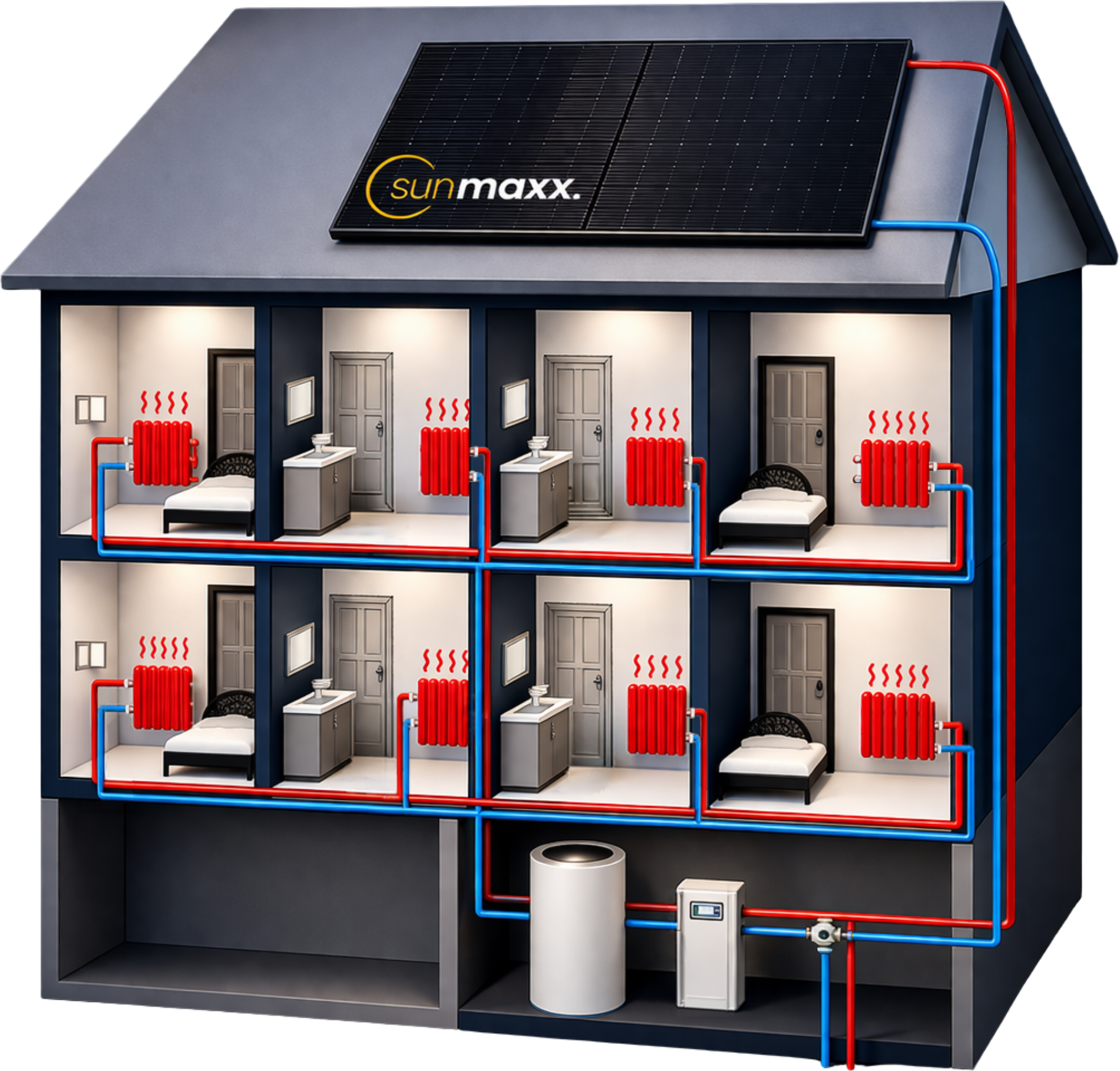
Image partly created with AI
One Heat Source.
Various Integration Options.
- Simultaneous supply of electricity and heat
- Provision of low-temperature heat
- Heat source for brine-to-water heat pumps
Ideal for:
- Buildings with limited roof space
- Areas with regulations on noise emissions
- Projects with high energy demand
- Water protection areas
- Restrictions on geothermal energy
For New Buildings, Energy-efficient Refurbishments and Integrated Solutions
Worthwile for Most Projects.
For Some, Even Indispensable.
- PVT combines photovoltaics with low-temperature heat generation in a single module.
- In addition to electrical energy, the modules generate heat from solar radiation and ambient air.
- The thermal side serves as a direct heat source for brine-to-water heat pumps.
- In combination, PVT modules and a heat pump form a fully-fledged, fossil-free heating system.
- To increase efficiency and for projects with high energy demand, combined systems with storage, geothermal energy, and additional solutions are possible.
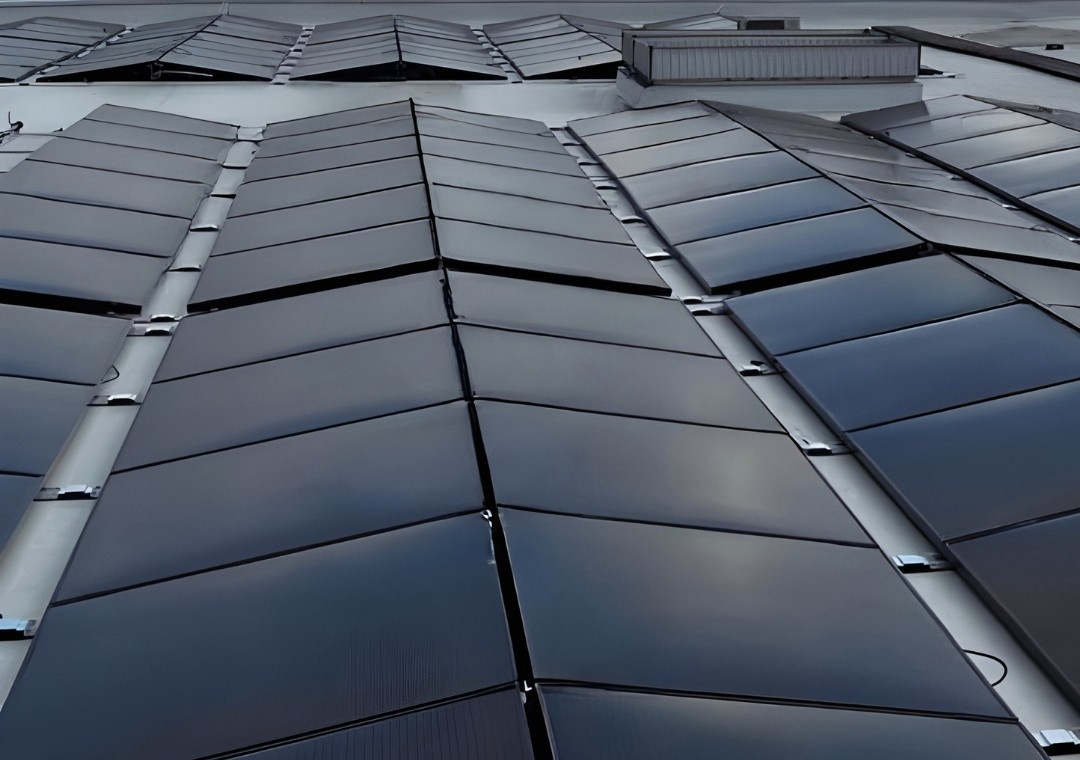
PVT is not be regarded as an isolated product, but rather as system decision. It counts as one of the most economical options for shifting to renewable, decentralised, and largely self-sufficient energy systems, while ensuring high overall system efficiency.
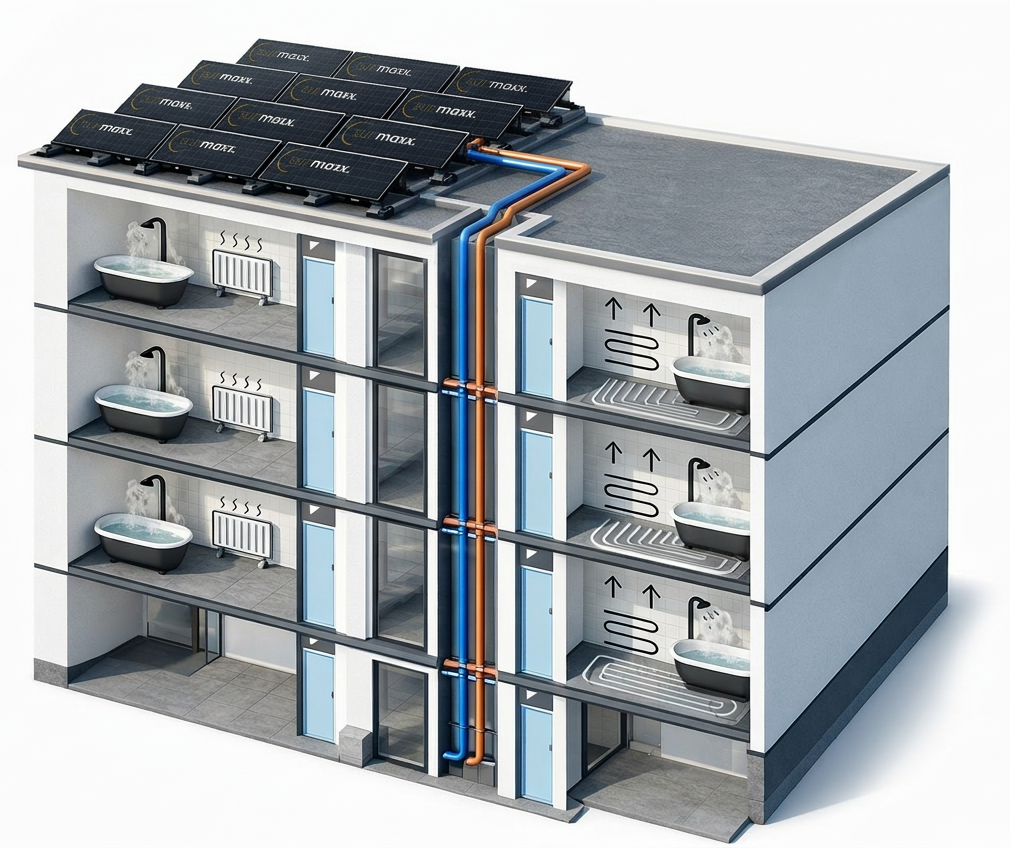
Image partly created with AI
Projects PVT is Worthwhile for
- New builds with heat pump concepts, e.g. districts and multi-family buildings
- Heat supply for entire neighbourhoods in the form of low-temperature district and local heating networks
- Decarbonisation of entire industrial sites, often in combination with geothermal energy
- For tight budgets combined with high decarbonisation targets
- For regeneration of geothermal systems
Projects with PVT: What Needs to Be Clarified in Advanced
1. Building Type and Use
-
New construction or existing building
-
Residential or non-residential
-
Load profile and usage requirements
- Available / required heating infrastructure
- Applications: heating, cooling, process heat ...
2. Available Active Surface
-
Roof
-
Façade
-
Orientation
-
Shading
-
Technical restrictions
3. System Configuration
-
Heat pump
-
Storage
-
Hydraulic integration
-
Monovalent or bivalent solution (PVT as sole heat source vs. combination with other energy sources)
4. Structural Integration
How Sunmaxx Supports in Early Project Stages
Sunmaxx is a startup with a relatively small team. We kindly ask for your understanding that we are unable to provide free concepts, simulations, or system designs. However, we are happy to support you with:
- Assessment of technical feasibility
- Classification and initial system considerations
- Provision of technical documentation
- Opportunity for technical exchange
- Networking with executing companies
- Visits to already implemented projects and large-scale installations
What Planning and Engineering Firms Say about Sunmaxx
Planning Challenges – and Solutions with PVT Technology from Manufacturer Sunmaxx
Challenge
- Integrating decarbonization into design phase: linking CO₂ targets with building services engineering
- Limited or lack of suitability of conventional source-based solutions
- Efficient use of limited space, especially in complex building structures
- Permitting and site constraints (e.g. water protection zones or noise protection requirements)
- Holistic approach: early integration of building envelope and energy concept
Solution
- Three times more efficient use of available roof areas compared to conventional PV
- Silent, direct heat source for brine-to-water systems, installed within the building
- No permitting processes for deep drilling, soil investigations or similar requirements
- Simple integration thanks to Sunmaxx compatibility with standard PV systems
- Significantly lower investment costs compared to geothermal systems
Advantages for Planners and Architects with Sunmaxx PVT
- Low pressure loss: Connection of up to 20 Sunmaxx PVT modules in a single hydraulic circuit – low planning and installation effort
- Modular, scalable concept: PVT fields with flexible expandability without hydraulic complexity
- High overall energy yield: Simultaneous electricity and heat generation on the same surface – significantly higher energy yield per m² compared to pure PV or solar thermal systems
- Compatible with standard system components: Can be combined with all common brine-to-water heat pumps as well as standard PV mounting systems
- Reduced planning effort compared to geothermal systems: No permits, no planning for deep drilling, soil surveys or similar required – low-risk and easy to calculate
- Highly cost-efficient through industrial series production: Reduced investment costs compared to separate energy solutions, geothermal systems or even other PVT technologies
- Significant reduction in project costs: Excellent synergies with geothermal energy – regeneration of ground probes through PVT reduces drilling depth and investment costs
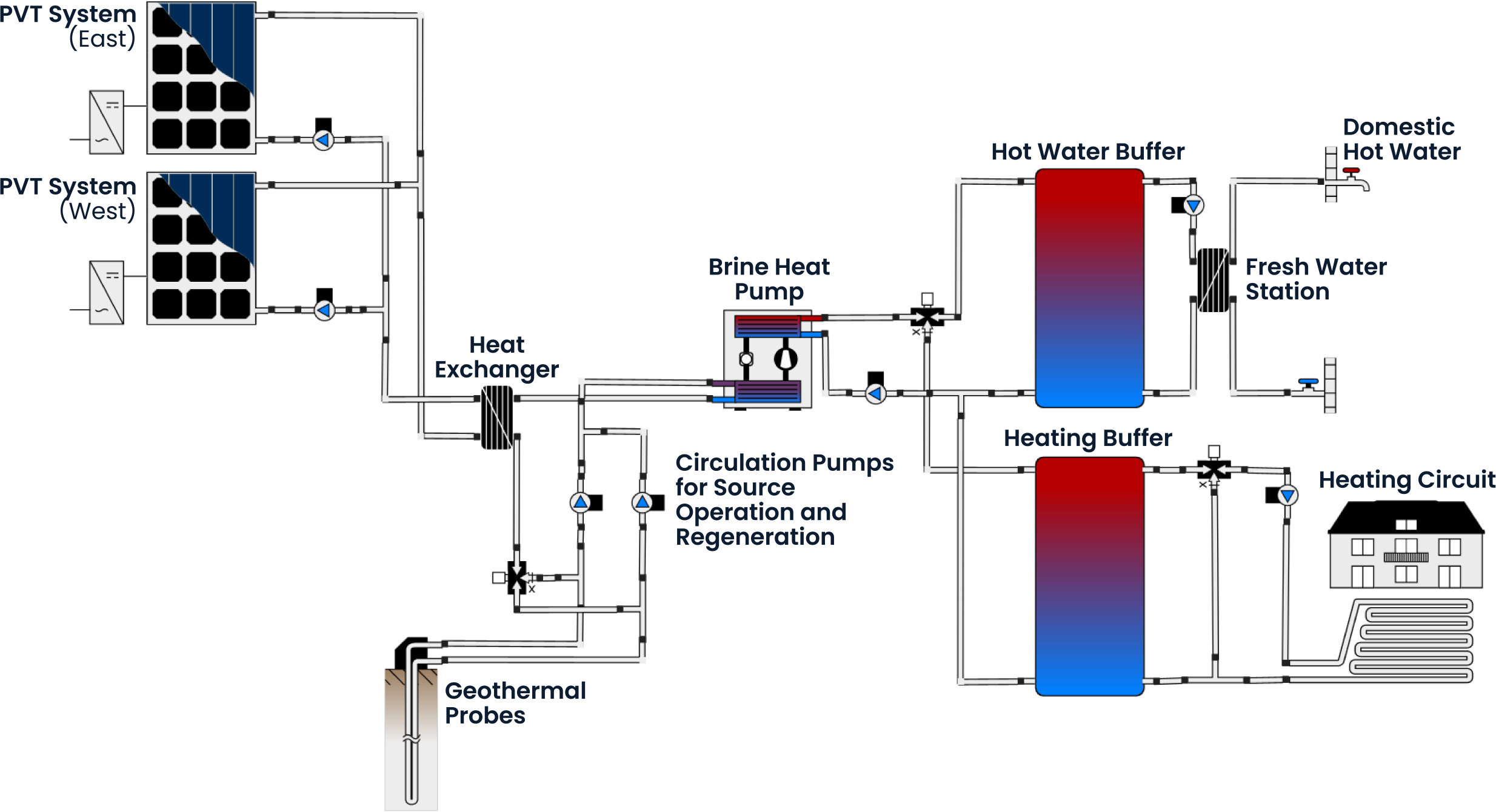
Typical Hydraulic Schematic Bivalent
Comparing Heat Sources: PVT vs. Geothermal Energy vs. Air-to-water Heat Pumps
| Technology | PVT | Geothermal | Air-to-water Heat Pump |
|---|---|---|---|
| Components | 2 | 2 | 3 |
| Efficiency per m² | ✔high | ✔high | ✖low |
| Typical seasonal performance factor (SPF) | ✔4.5 – 6, sometimes higher | ✔4.5 – 6, sometimes higher | ✖< 3.5 |
| Heat pump installation location | indoors | indoors | indoors + outdoor unit |
| Space requirement | ✔low | ✔low | ⚠medium |
| Building cooling | ✔yes | ✔yes | ✔yes |
| Investment costs | ⚠medium | ✖high | ⚠medium |
| Heat pump subsidy eligibility | ✔yes | ✔yes | ⚠depending on noise emissions |
| VAT exemption for PV share | ✔yes | ✔yes | ✔yes |
Planning Documents, Materials, Downloads
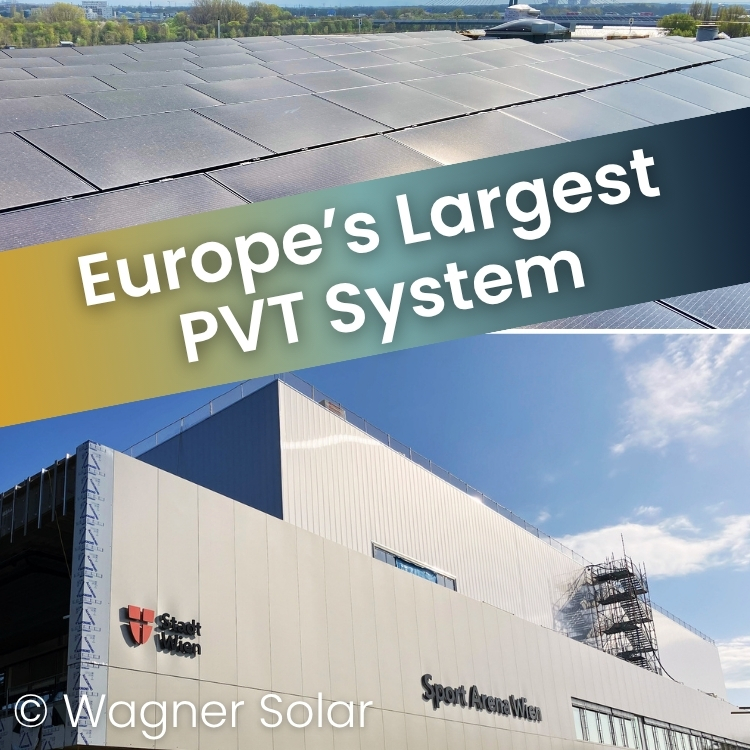
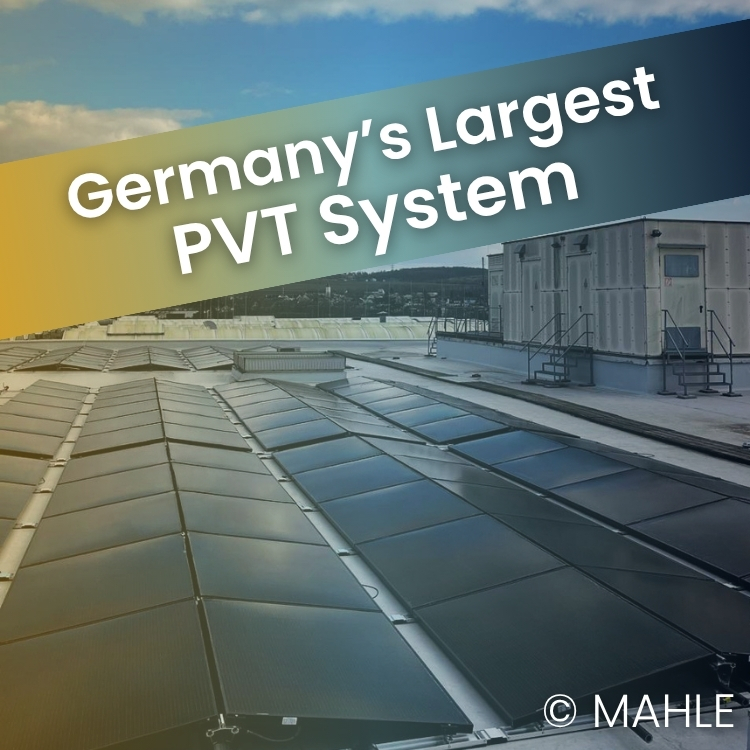
How PVT Is Used in Real Project Configurations

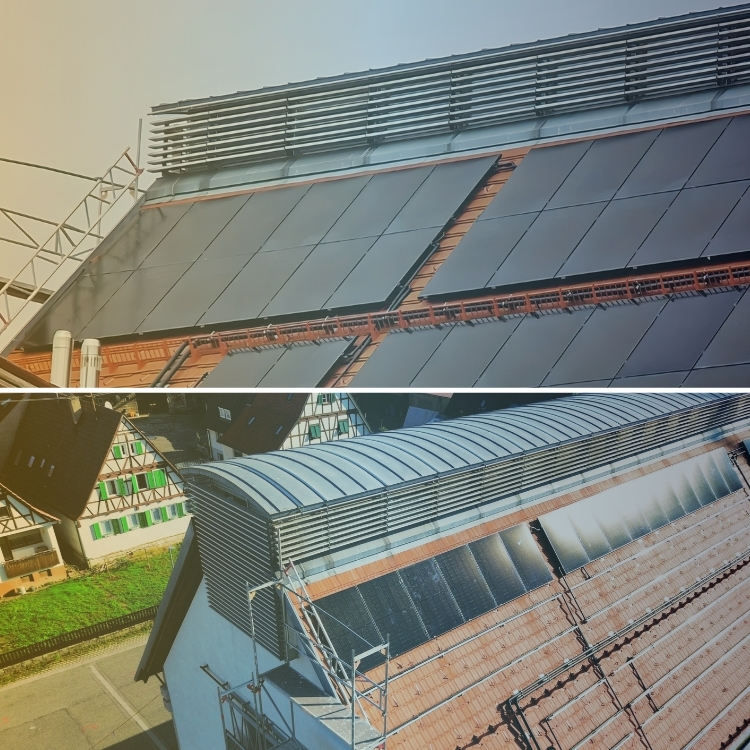
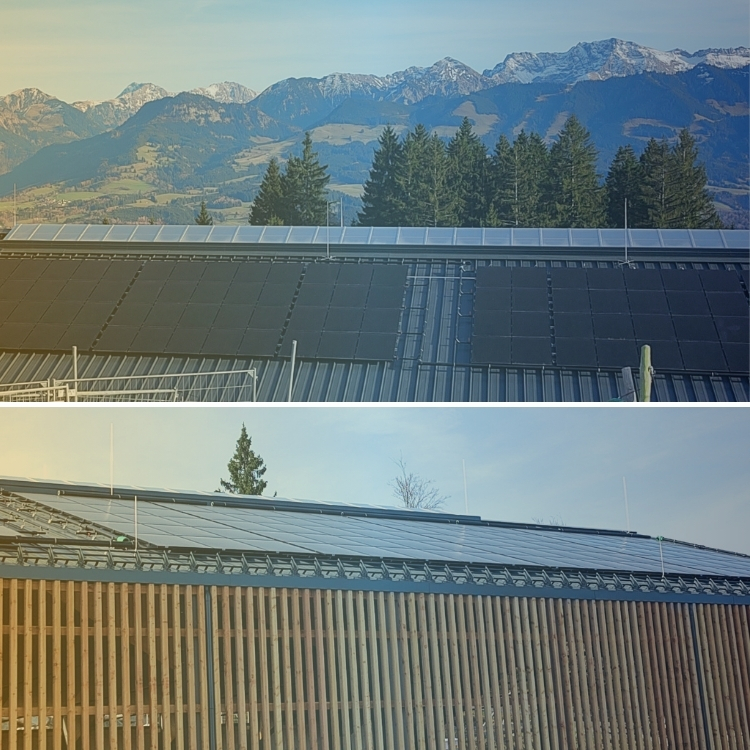
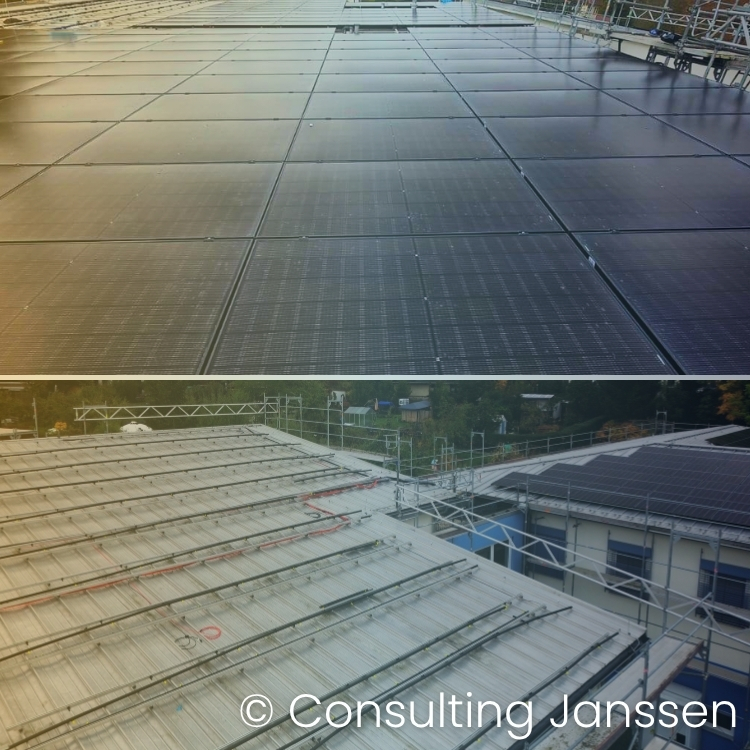
The Most User-friendly PVT Technology.
7 Short Facts about Sunmaxx PVT Modules:
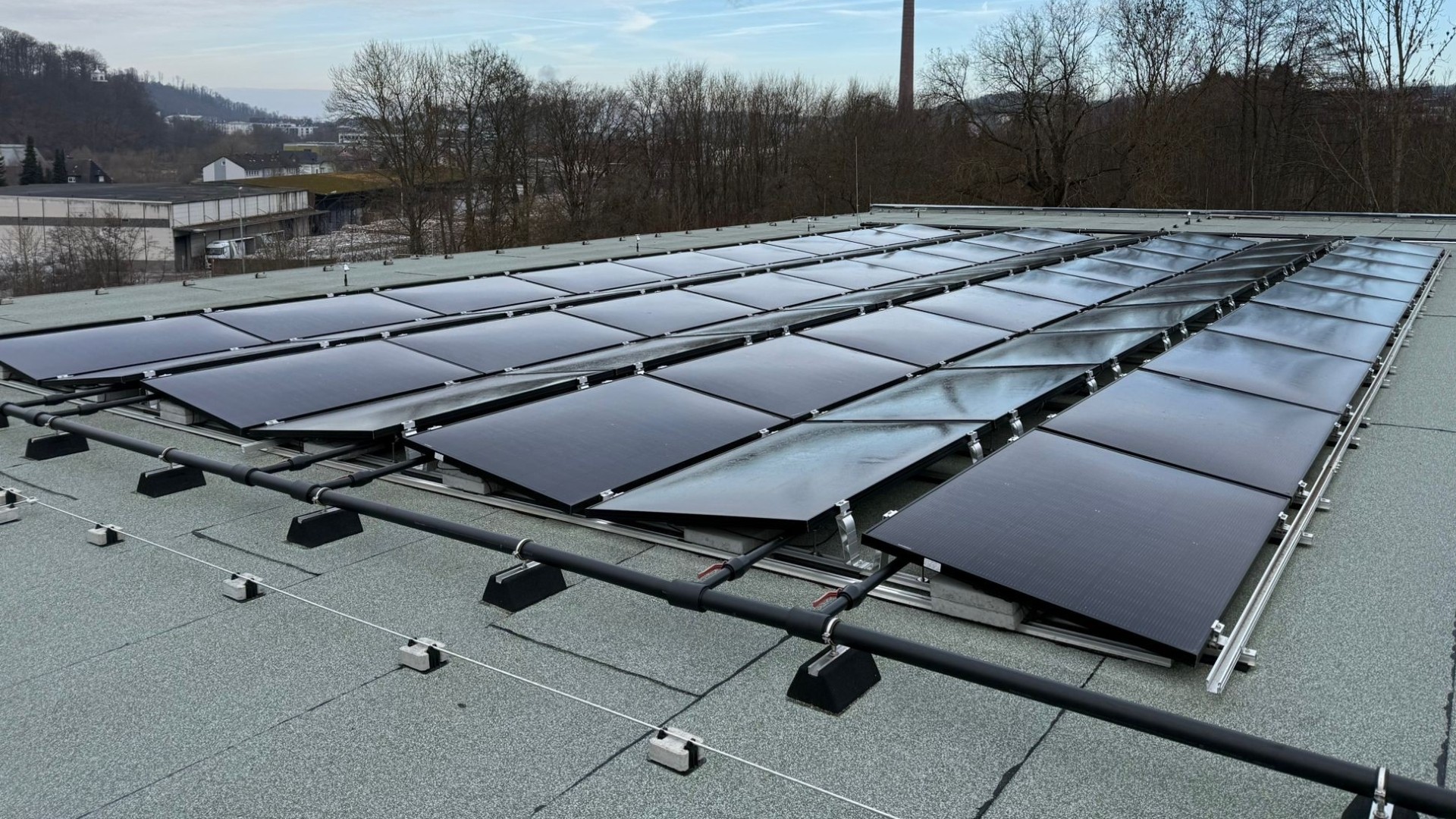
- Horizontal or vertical orientation, without restrictions regarding rear ventilation.
- Mountable on any common PV mounting structure.
- Suitable for any roof type, including green roofs.
- Wall and façade systems as well as ground-mounted installations possible.
- Low structural load: with a filled weight under 30 kg, suitable for (almost) any PV-capable roof.
- Snow melting possible via simple reversal of the heating circuit.
- Also suitable for buildings under historic preservation.
Typical Questions from the Field
PVT is suitable for all types of buildings, from private homes and apartment buildings up to industrial plants and low-temperature local and district heating networks. There are virtually no limitations for the use of PVT. Wherever heating and process heat are needed, PVT can provide a solution. In many cases, when geothermal heat pumps are planned, PVT can reduce the required drilling depth or height, representing a significant cost-saving factor in projects. In some instances, geothermal systems can even be completely replaced by PVT.
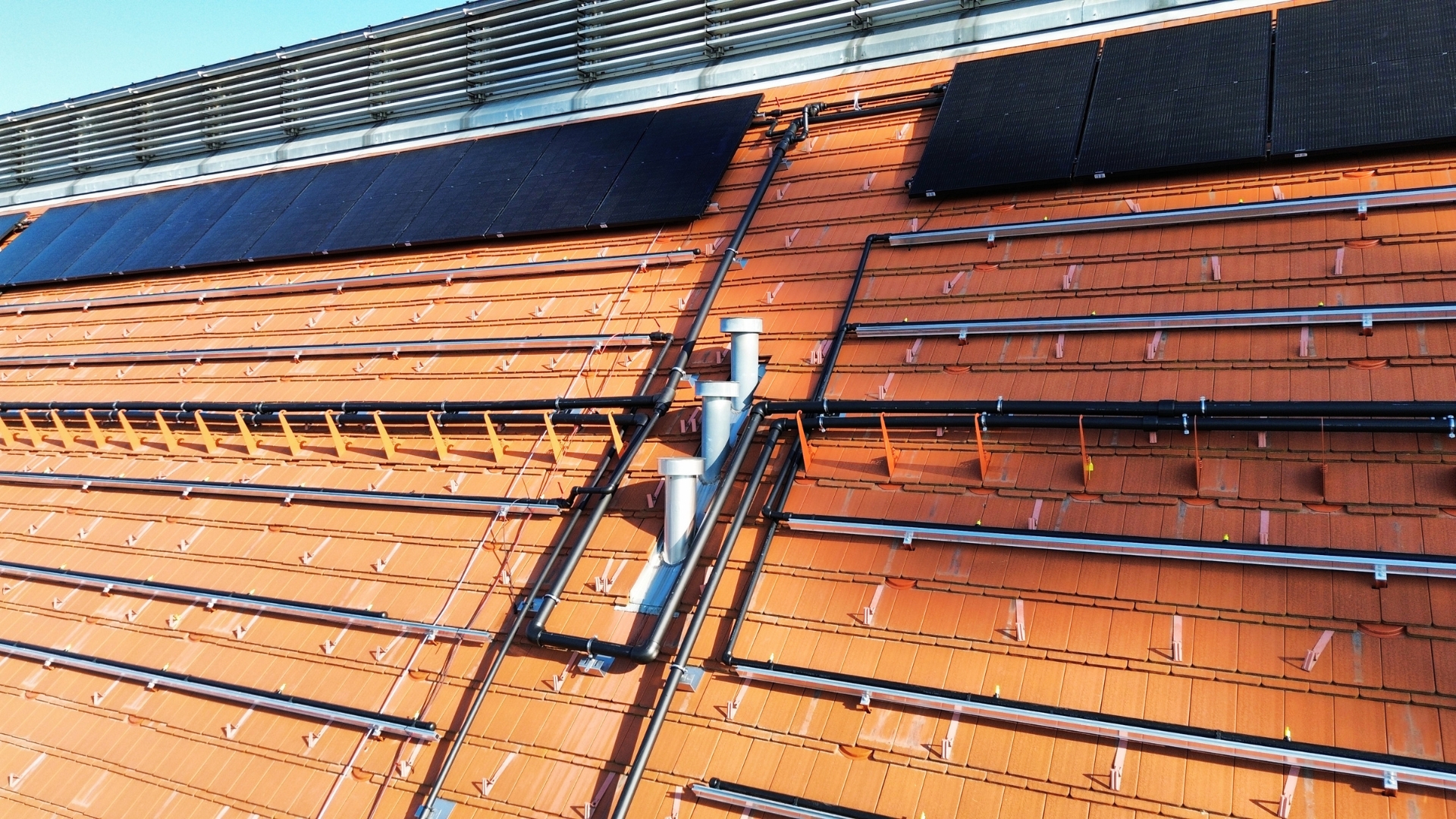
As with all energy concepts, the earlier PVT is considered in the planning phase, the more effectively the process can be managed. The advantage of PVT is that, due to the commonality of PV, no significant additional effort is required in planning and design. Most buildings already have available roof space. If PV is planned, a substructure must be designed anyway. The same applies to PVT, and a hydraulic pipe can be installed on this substructure, leading to the heating or technical room where a brine, water, or heat pump is located. This can be combined with storage solutions or the integration of additional energy sources. These include, for example, ice storage, buffer tanks, geothermal baskets, ground collectors, deep boreholes, as well as combinations with fossil heating systems to cover peak loads.
PVT is often more efficient than geothermal systems because it produces both electricity and heat simultaneously. A geothermal system delivers only heat. In terms of cost and long-term efficiency, PVT is very economical compared to purely geothermal solutions. The initial investment for a PVT system is also significantly lower than that of a geothermal system or even a combination of geothermal and PV—that is, separate energy systems and energy flows. Consequently, the design effort is naturally lower. Since the roof is already planned in most cases for renewable energy, there is no significant additional effort in planning and design, making substantial cost savings possible in this regard.
PVT systems serve as heat source for brine-to-water heat pumps, not primarily as electricity providers. This means that operating a PVT system is only worthwhile in combination with a brine-to-water heat pump. The exception is swimming pool heating, where direct operation is also possible. In in this specific case, the only component required between the PVT system and the pool is a heat exchanger. In common applications, the PVT system is hydraulically connected to the brine-to-water heat pump, with a supply and return line. Each module has a supply and return connection and is linked to the corresponding pipe via a connection hose. Due to the low pressure drop, up to 20 modules can be connected in a single hydraulic line.
Sunmaxx PVT: Integrated System Compatibility
Various Successful Projects Implemented With:
alpha innotec · Bosch/Buderus · Dimplex · Ecoforest · Heidinger · iDM · M-TEC · NIBE · NOVELAN · OCHSNER · ratiotherm · STIEBEL ELTRON · tecalor · Vaillant · Viessmann · WATERKOTTE
Any Questions? Please Contact Our SalesTeam.

Michael Gehenzig, Head of Sales
DE North/West · +49 (0)1520 3691677

Sascha Todorovic, Senior Sales Manager
DE South/East · +49 (0)1522 6383293