
PVT for Installers: Heat and Power from One Module.
Easy to Plan. Quick to Install. Legally Straightforward.
Heat Source for Brine Heat Pumps. Entirely Drill-free.
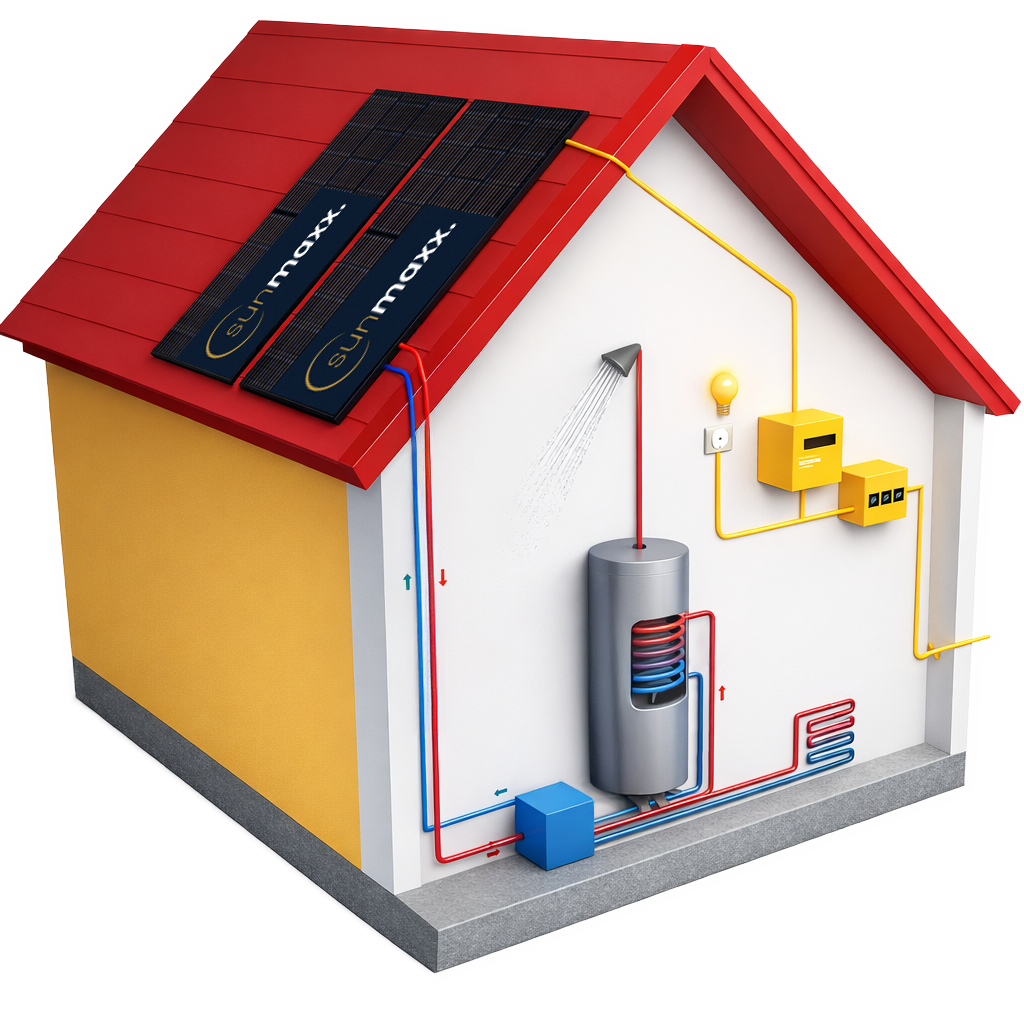
Why PVT Fits Into Your Portfolio
- No deep drilling, no lengthy permits
- No coordination with drilling or civil engineering companies
- Plannable like PV, usable like geothermal energy
- Ideal for new builds and existing buildings
The Easiest Way to Access a Heat Source: What PVT Actually Means for Your Project Execution
What PVT Is – and What It Is Not
-
PVT combines a low-temperature heat source with photovoltaics on the same surface area.
-
The modules extract heat both from solar radiation and from the ambient air.
-
The harvested heat serves as a source for brine-to-water heat pumps, comparable to geothermal systems.
-
PVT is no classic solar thermal technology. It provides low-temperature heat.
What this means for your company:
-
“The ground collector on the roof” – an alternative to geothermal systems and a power generator in one
-
Above-ground, permit-free heat source
-
Vandalism-resistant, silent heat source on the roof
-
No excavation, no lengthy applications or approval procedures, no subsurface risks
-
No waiting times, no dependence on third-party companies with fully booked schedules (e.g. drilling contractors)
-
Low maintenance – no issues with overpressure, frozen pipes, or brine degradation
-
No additional insulation required
Is PVT Suitable for My Business?
PVT Is Suitable for:
-
Businesses focused on heat pumps
-
New builds and energy-efficient renovations
-
Projects without the possibility or permits for drilling or air-to-water heat pumps
-
Projects with limited land area
PVT Is NOT Suitable for:
- Buildings with an existing air-to-water heat pump
- Applications as power only supplier
- Buildings with recently renewed heating systems
- Applications with very high supply temperatures
- Existing buildings lacking roof or façade potential
Heat Sources in Comparison: PVT vs. Geothermal vs. Air-to-water Heat Pump
| Technology | PVT | Geothermal | Air-to-water Heat Pump |
|---|---|---|---|
| Components | 2 | 2 | 3 |
| Efficiency per m² | ✔high | ✔high | ✖low |
| Typical seasonal performance factor (SPF) | ✔4.5 – 6, sometimes higher | ✔4.5 – 6, sometimes higher | ✖< 3.5 |
| Heat pump installation location | indoors | indoors | indoors + outdoor unit |
| Space requirement | ✔low | ✔low | ⚠medium |
| Building cooling | ✔yes | ✔yes | ✔yes |
| Investment costs | ⚠medium | ✖high | ⚠medium |
| Heat pump subsidy eligibility | ✔yes | ✔yes | ⚠depending on noise emissions |
| VAT exemption for PV share | ✔yes | ✔yes | ✔yes |
Experiences with PVT: What Our Partners Say
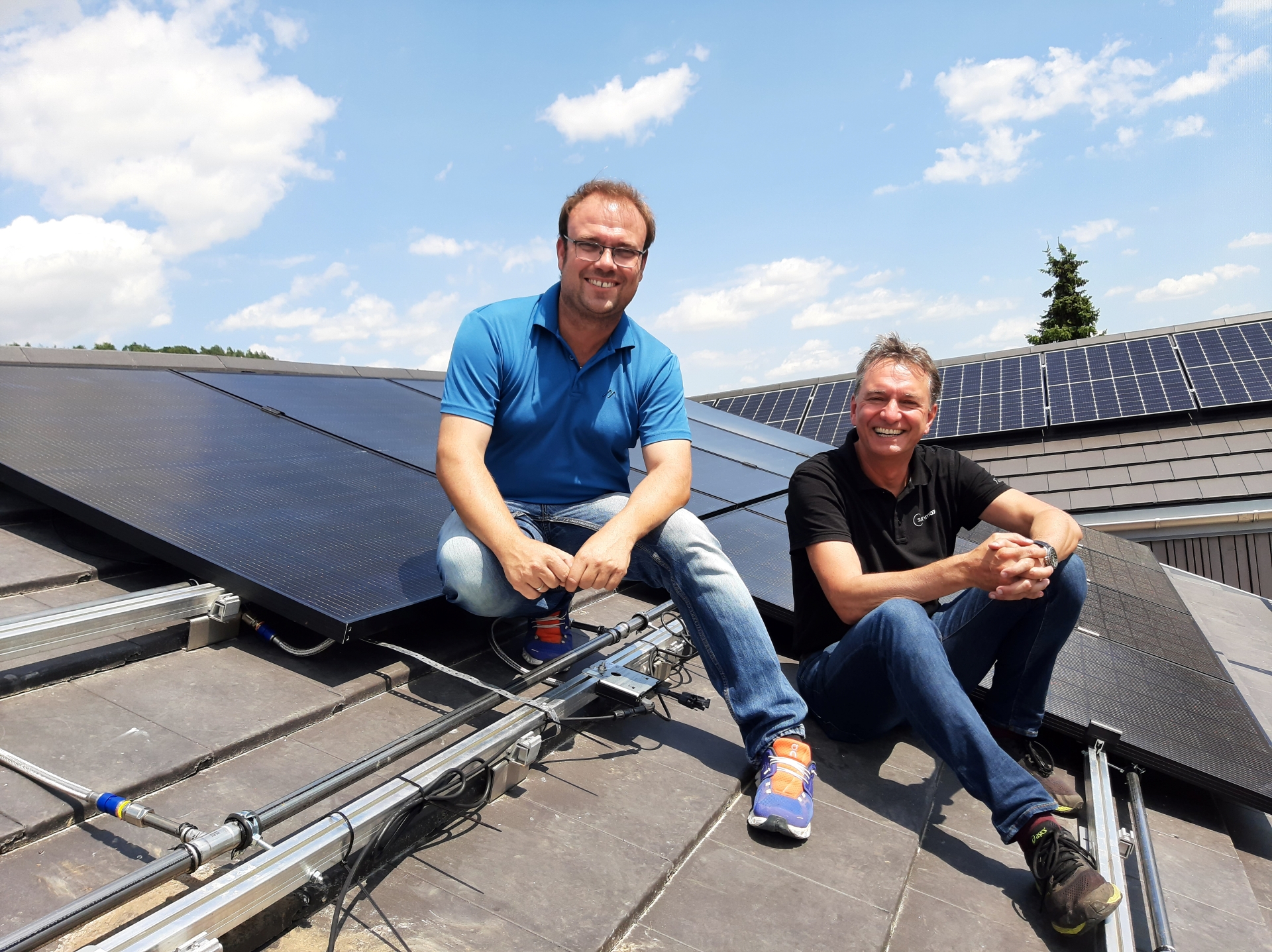
What PVT Changes In Your Daily Operations
-
Short project timelines, independent of lengthy approval processes
-
No planning risks: unaffected by regulations on noise emissions or water protection areas – 0 % rejection rate
-
Projects become more predictable thanks to fixed module prices and standardized design procedures → fast quotation preparation
-
Installation fully completed in 1–2 working days
-
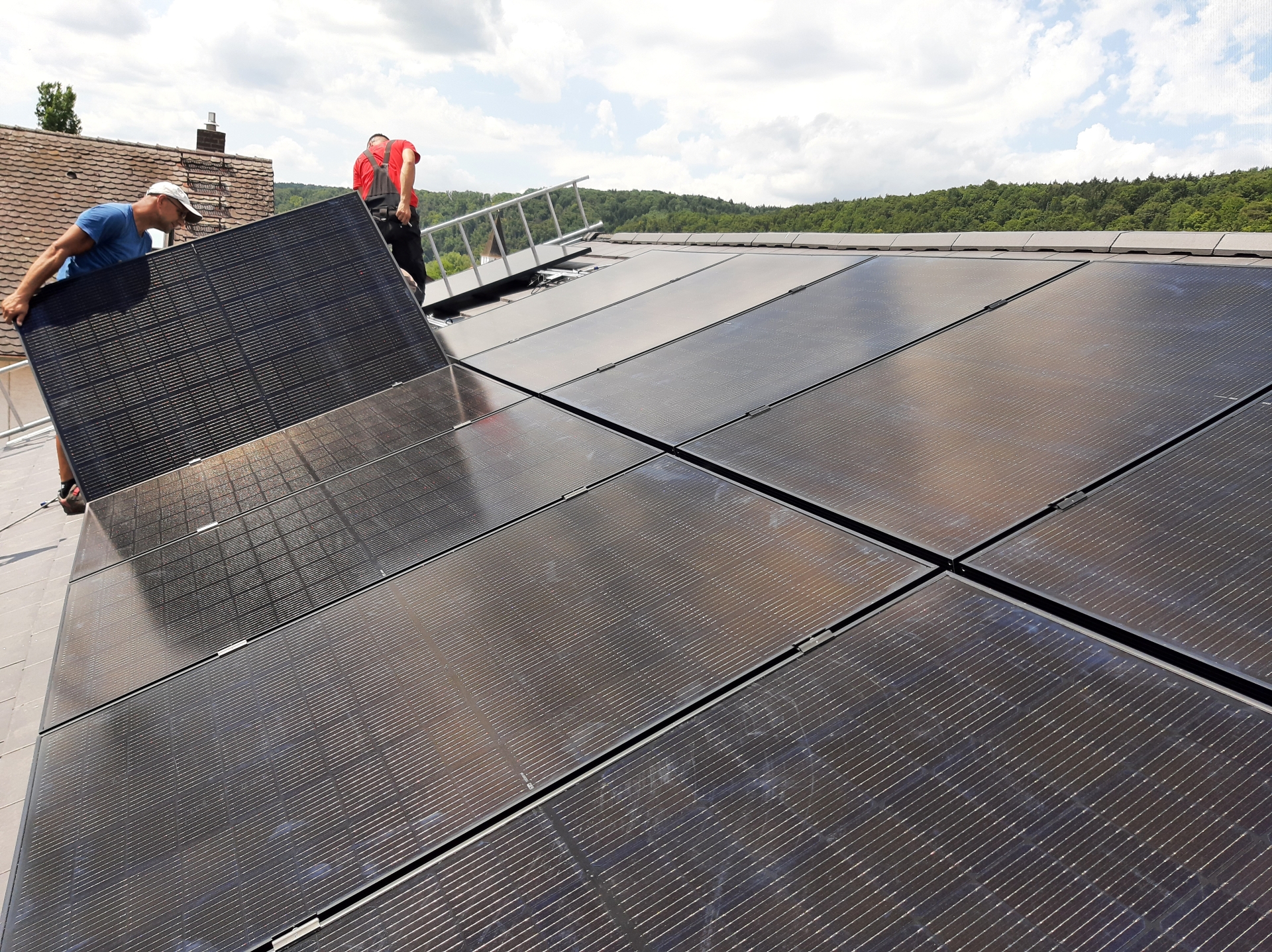
Simple rooftop installation
-
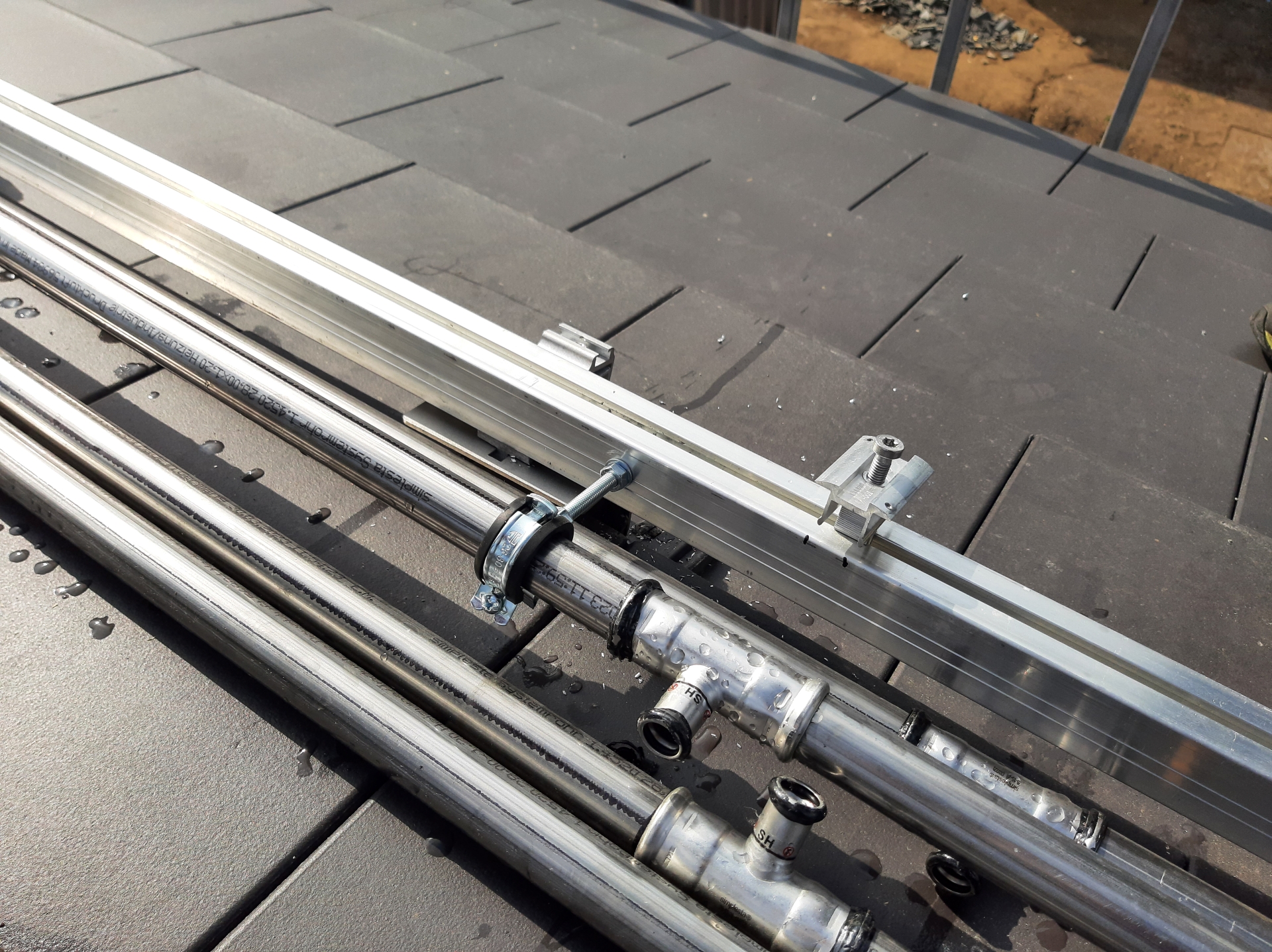
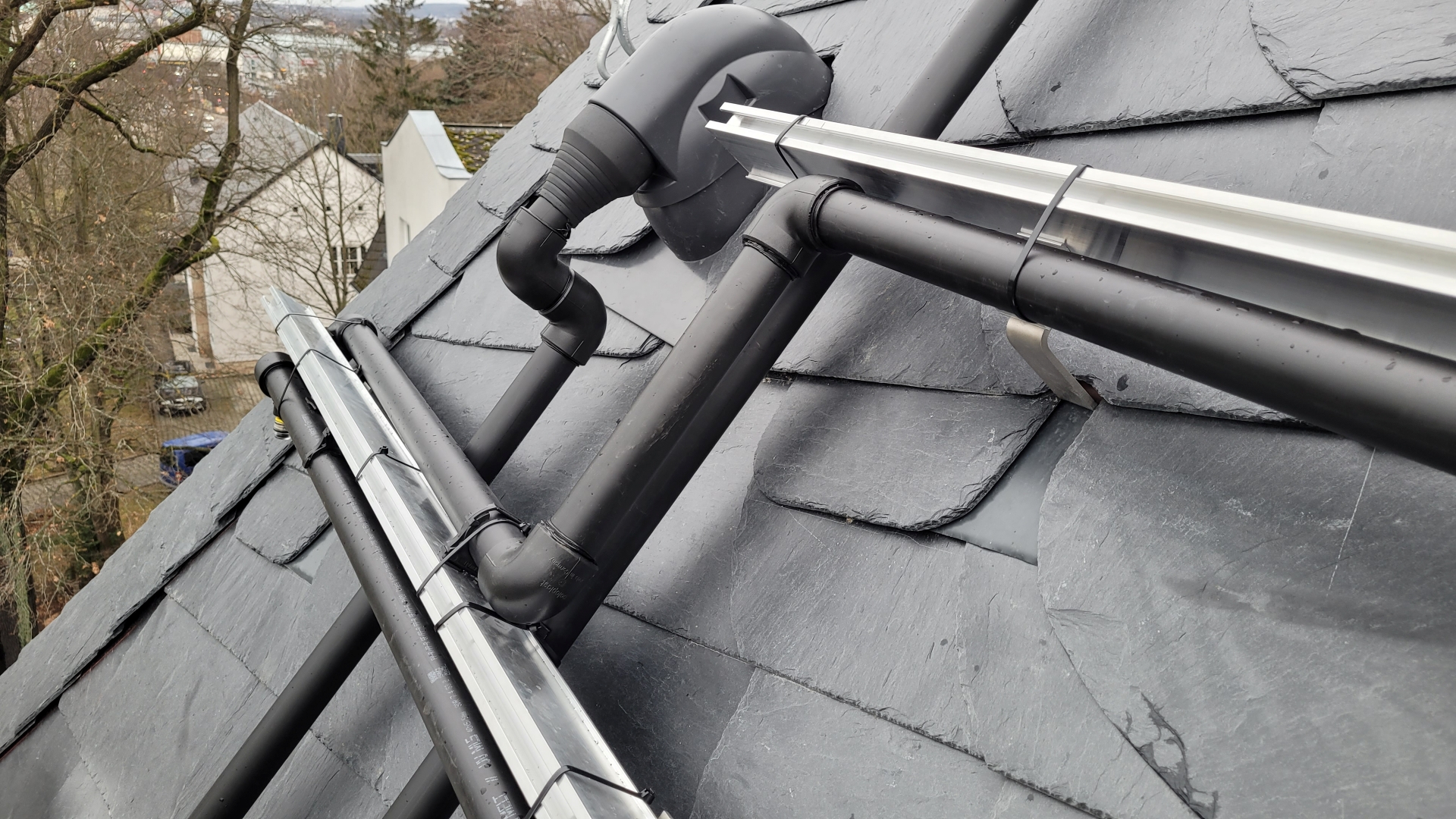
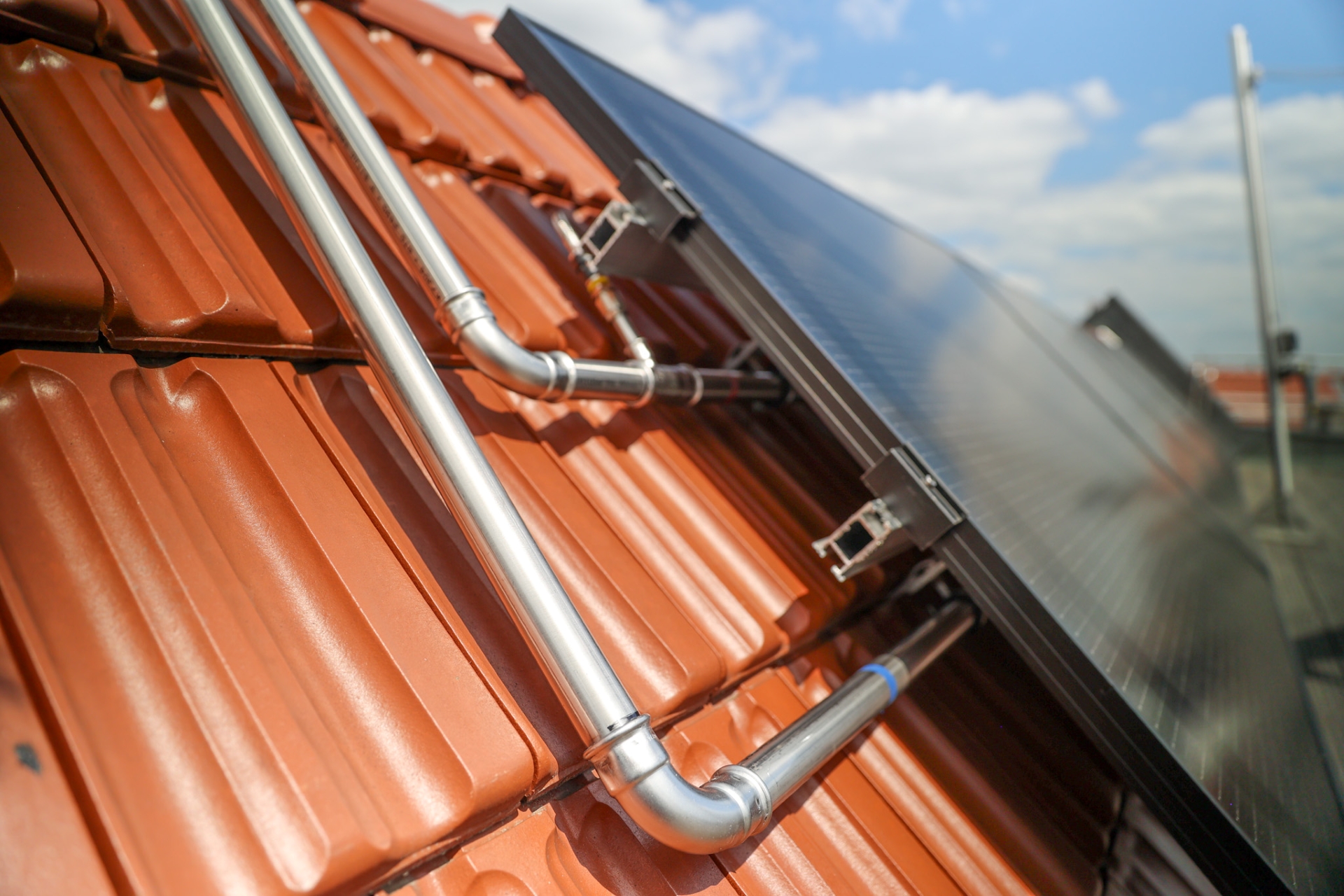
Hydraulic components with plastic or stainless steel piping including easy plug-in connector technology: no drilling, no screwing, no additional stripping required
-
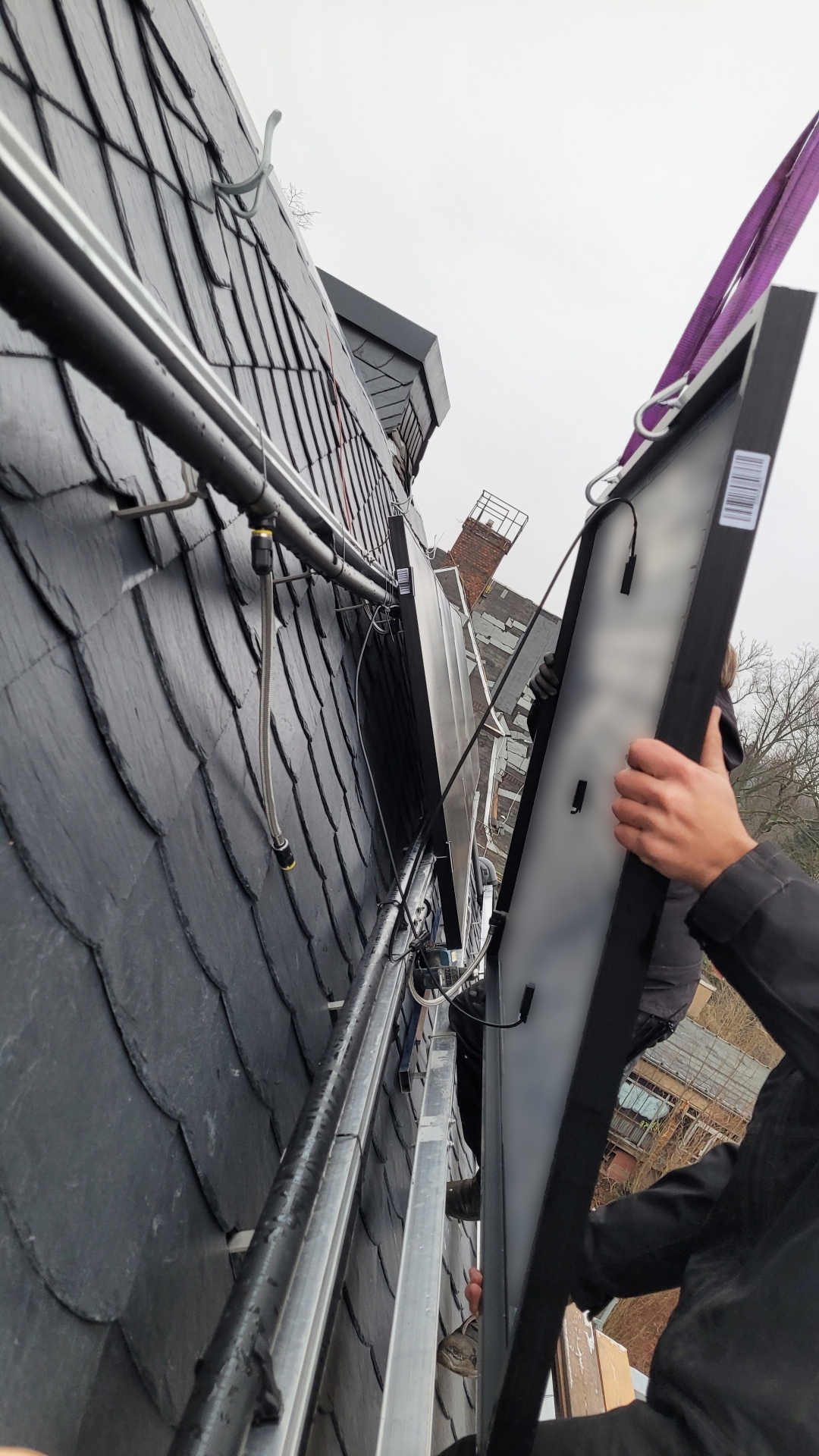
Suitable for heritage buildings (e.g., slate roofs)
-
Applicable for slopes from 0° to 90°, including façade installations
-
Design possible even on the north side
How a PVT Project Works
1. Before Order
- Listing as a certified partner in the Sunmaxx partner section
- Direct inquiries from end customers (private home and apartment building projects projects)
- Free project referrals by Sunmaxx
2. Planning & Design
- Design heating load and heat pump as usual
- Determine required PVT area:
- Support and expert assistance from Sunmaxx distributor Wagner Solar for design, procurement, and delivery
3. Installation
- Compatible with all common PV substructures
- Connection of mounting system, piping, and modules using flexible hoses
- Integration into the brine circuit
4. Commissioning
Why PVT Proves Itself in Everyday Business
Planning
-
Clear design
-
Fewer external dependencies
Permits & Legal
- Significantly reduced coordination effort
- Lower project risks
Project Execution
-
No coordination of excavation or drilling work
-
Manageable trades
Economic Efficiency
- Predictable costs
- Easy to explain to clients
The PVT System with Easiest Installation
Key facts:
- Sunmaxx modules are compatible with any mounting type and can be mounted on almost any substructure:
-
- Flat roof
- Pitched roof
- Open ground
- Façade
-
- Piping in 2 systems available:
-
- Stainless steel – mainly for smaller installations such as single-family homes, adapters available
- UV-resistant plastic – for larger installations, easier installation, pre-assembled and available from Sunmaxx distributor Wagner Solar
-
- Up to 20 modules can be connected in parallel to a single hydraulic line
PVT Installation Step by Step
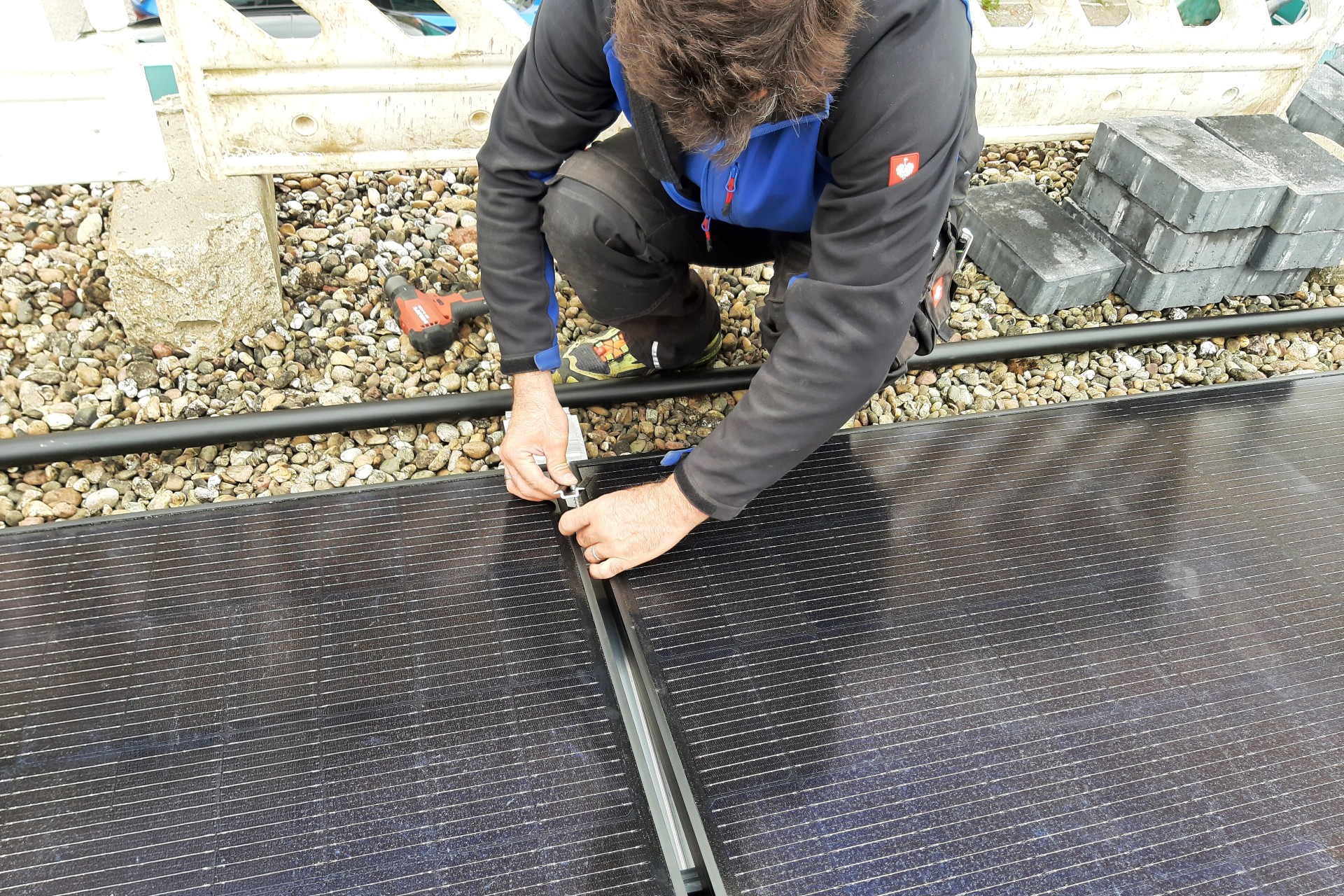
- Construct the mounting systems according to corresponding specifications, just like with PV
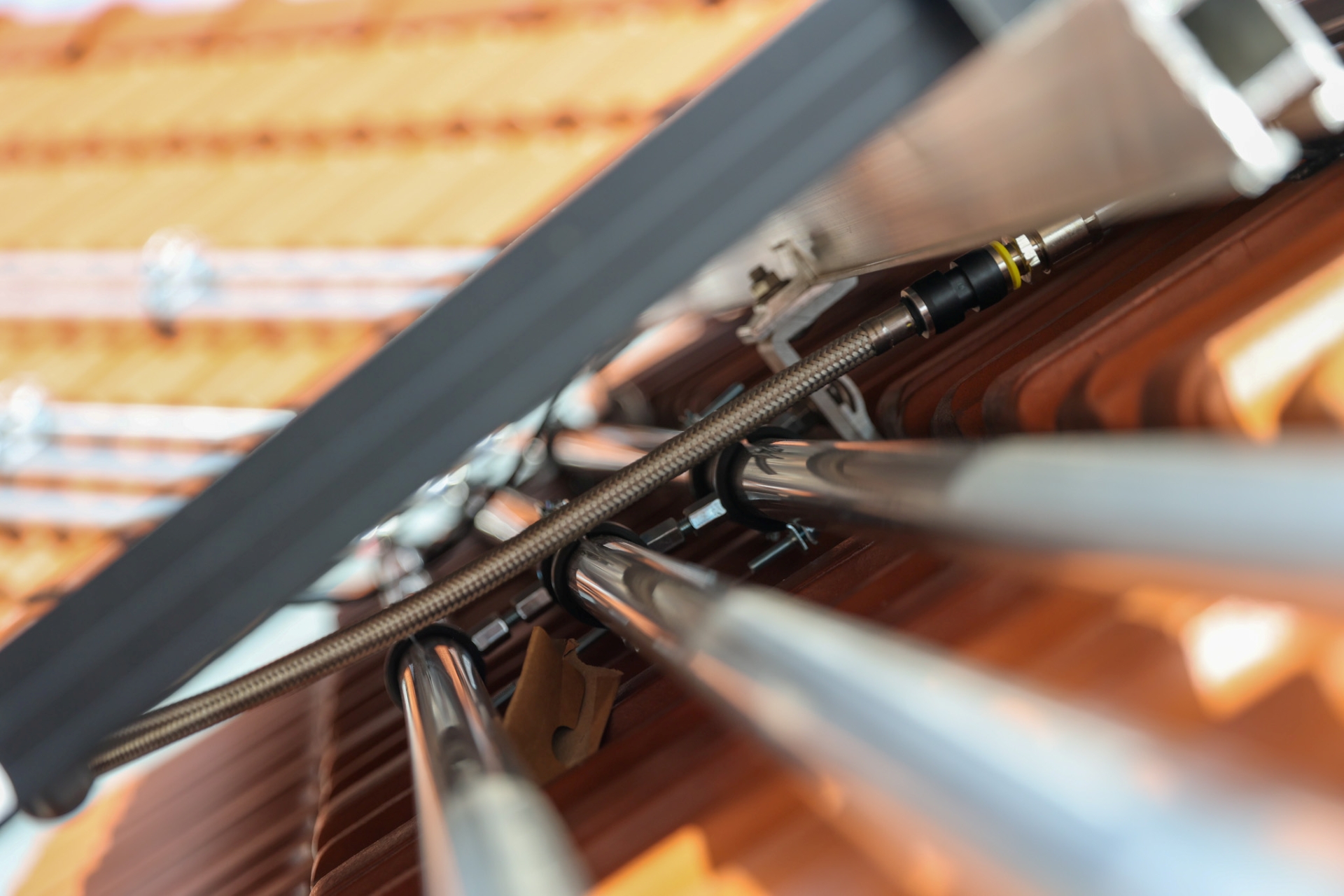
- Install the hydraulic piping on the substructure and secure it with the supplied clamps
- Once substructure and hydraulics are complete, install the modules – ideally in teams of two: one person holds the module, the other makes the connections
- Connect the standardized MC4 plug on the electrical side by hand
- On the thermal side, connect the supplied hoses: one end to the module, the other to the pipe. No tools required: the hoses click in with a hand-operated connector
- Reliable, leak-proof connection ensured by proven spring mechanism
- After electrical and hydraulic connections, finalize by securing the module frame to mounting system
This video is played via the platform YouTube. By clicking play, you agree that data may be processed by YouTube as a third-party provider. Sunmaxx has no influence over this data processing.
How Do I Become a Sunmaxx Partner?
What Are the Benefits of Becoming a Certified Sunmaxx Partner?
- Excellent service and support from our field sales team as well as through our distributor Wagner Solar, including roof planning, material delivery, and on-site logistics. For larger orders, direct delivery by Sunmaxx is also possible.
- Planned: annual event with a get-together and sightseeing in Sunmaxx’s hometown, Dresden.
- Ongoing support from our field sales team.
- Continuous, free forwarding of new customer inquiries.
- Optional participation of our sales team in your events, trade shows, or information evenings.
Typical Questions from the Field
JYes, if properly designed, PVT works perfectly even in winter, including on days without sunlight – because the module draws heat not only from solar radiation but also from the ambient air, similar to the outdoor unit of an air-to-water heat pump. It is important that the brine-water heat pump meets a source inlet temperature of -15 °C. At lower temperatures, an electric heater provides support. On sunny winter days, the source inlet temperature can even reach up to 20 °C. In any case, the system is significantly more efficient than pure air-source systems.
PVT is a highly reliable heat source. It harnesses two forms of renewable energy: solar radiation and ambient temperature. Sunmaxx modules are tested under extreme conditions and operate with high efficiency. Unlike comparable solutions, hybrid modules are vandalism-resistant, silent, permit-free, and combine heat and electricity generation in a single system.
Sunmaxx PVT is highly durable. Solar radiation and ambient air are always available. At very low temperatures, an electric heater integrated into the heating circuit provides support.
Unfortunately, the copper pipes commonly used in solar thermal systems are not compatible with PVT modules. The reason is the aluminum heat exchanger used for the thermal part of the module. Aluminum is not compatible with copper, as this can lead to corrosion. During product development, aluminum was chosen for several reasons: the material is lightweight and comparatively cost-effective, which has a positive impact on Sunmaxx module prices. This clearly offsets the slightly higher costs of any necessary pipe replacement.
Sunmaxx PVT: Integrated System Compatibility
Various Successful Projects Implemented With:
alpha innotec · Bosch/Buderus · Dimplex · Ecoforest · Heidinger · iDM · M-TEC · NIBE · NOVELAN · OCHSNER · ratiotherm · STIEBEL ELTRON · tecalor · Vailant · Viessmann · WATERKOTTE
Become a Sunmaxx Partner
Expand Your Portfolio and Secure a Unique Selling Point that Pays Off. Contact Us Now.

Michael Gehenzig, Head of Sales
DE North/West · +49 (0)1520 3691677

Sascha Todorovic, Senior Sales Manager
DE South/East · +49 (0)1522 6383293